Explore Höga Kusten

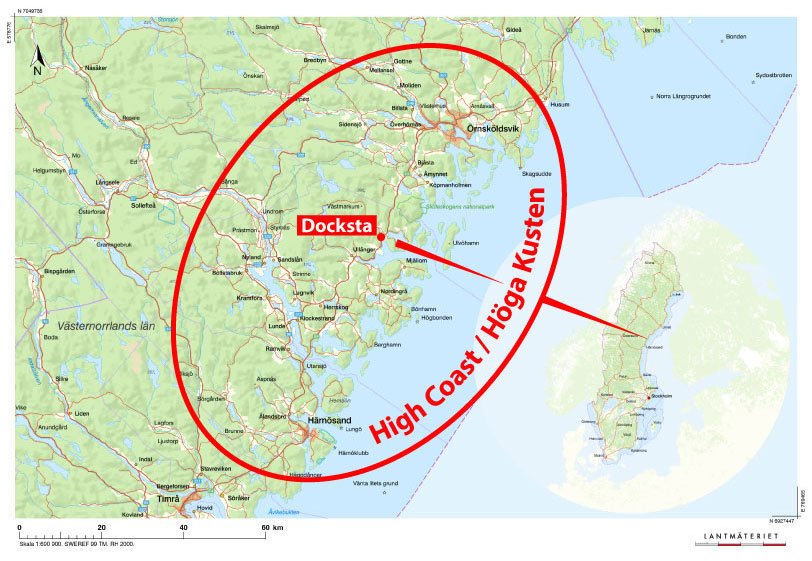
Docksta Base Camp Map: Your Guide to High Coast Adventures

A Living Map for Exploring the High Coast (Real Days, Not Checklists)

Some places you visit. Others become your base camp—a place that opens up a region, one day and one story at a time.

Docksta is that kind of place: a crossroads where the High Coast’s most iconic views, secret forests, and real local gems all come within reach—by bike, on foot, by boat, or simply with the right plan. After years of helping guests and exploring for myself, I’ve built this living map of some of the best day trips, wild corners, and micro-adventures you can start from Docksta.

🇸🇪 Kort på svenska: Det här är min personliga karta över utflykter, stigar och platser du kan nå från Docksta – med cykel, till fots eller bara med nyfikenhet. Varje pin är en riktig upplevelse, testad och delad med gäster och vänner. Behöver du tips eller utrustning? Fråga gärna!

🇫🇮 Lyhyt suomeksi: Tämä on oma karttani retkistä ja paikoista, joihin pääset Dockstasta – pyörällä, kävellen tai vain uteliaisuudella. Jokainen paikka kartalla on oikea kokemus, testattu ja jaettu vieraiden kanssa. Tarvitsetko vinkkejä tai varusteita? Kysy rohkeasti!

This isn’t just a list of “points of interest.” Every pin is a real story—a route I’ve tested, a summit where I’ve shared the view, a forest where guests have found connection, or a concert night that ended with a swim under the summer sky.

Whether you’re a guest, a local, or a traveler just passing through, this map is your invitation to explore the High Coast with the eyes (and curiosity) that might just make you call it “home.”

No bike? No problem. We’ll find a way.

A lot of the best High Coast days start the same way: you arrive curious, but traveling light. Thats why we keep a simple Outdoor Gear Rental (Grab&Go) corner at base camp bike rental and a few practical day kits (daypack, map, small essentials).

It’s open to everyone, not just our guests. No forms, no fuss just ask and we’ll help you choose an easy plan.

Open the Map (and See What Calls You)

Tip 👉 it’s a Google My Maps map—tap “Open in Google Maps” for full-screen navigation (best on mobile).

See every destination at a glance, plan your route, and start your adventure with one click.

Traveling without a bike? Bike rental is available at Docksta Havet (Grab&Go)—open to everyone. If you want, ask us to match a route to your time, weather, and energy.

How to Use This Map

  • Pick your mood: Views, forest, adventure, local life, or a mixtheres a pin for every kind of day.

  • Pick your time: 12 hours, half-day, or a full day out? Choose what fits you now, not what you should see.

  • Ask for help: Not sure? Message me or stop by the marina. I’ll help you match the route to the weather, your energy, and your style no stress.

  • Need wheels? Bike rental is available at base camp (Outdoor Gear Rental / Grab&Go) open to everyone.


Click a Pin, Start a Day (From Docksta Havet Base Camp)

Tip 👉 open the map in full screen for easier planning on mobile.

The Destinations (Guides & Stories Index)

Views & Classics

Forest & Wild

Docksta Gems

Events & Experiences

Extra Highlights (Map-only)

  • And yes—there’s more on the map.

    The list above is the curated “start here” shelf. On the map you’ll also find extra highlights: places you’ll remember—the kind that gift you an amazing viewpoint, a swim spot on a warm day, a short walk that feels bigger than it looks, or a perfect picnic corner. They’re all worth seeing, but I usually recommend them when someone has a specific request (time, weather, logistics)… or when you simply want that little “extra”. Zoom in and explore.

Why This Map?

The High Coast isn’t just a collection of “sights”—it’s a living landscape, and Docksta is the key to unlocking it. I’ve seen guests arrive with long lists and leave with one or two real memories: a summit at sunset, a forest nap, a swim after a sweaty hike, a concert that turned strangers into friends.

This map is designed to help you do less, but experience more.

But the real magic often happens in-between: the unplanned stop for coffee with someone you just met, the quiet moment on a dock when the wind drops and the bay turns to glass, or the laughter that comes when a “wrong turn” leads you to a new favorite place.

That’s why this map isn’t about “checking off” sights, but about giving you the freedom to follow your own rhythm.

Make It Yours

Zoom in and out. Click the pins. Read the guides. Then forget the map, pick one thing, and let the day do its magic.

If you want a plan that fits your mood, your time, and your legs, just ask. Every route here is tested, loved, and shared by someone who wants you to feel at home in the High Coast.

At the End of the Day

The best part of any day here? Coming back salty, happy, and just a little bit changed. Maybe you’ll have sand in your shoes, a new friend’s number in your pocket, or simply a story you didn’t expect to tell.

Ready to explore? Your base camp is here—where will you go today?


Stay Close to the Map (Seasiders’ Lodgings)

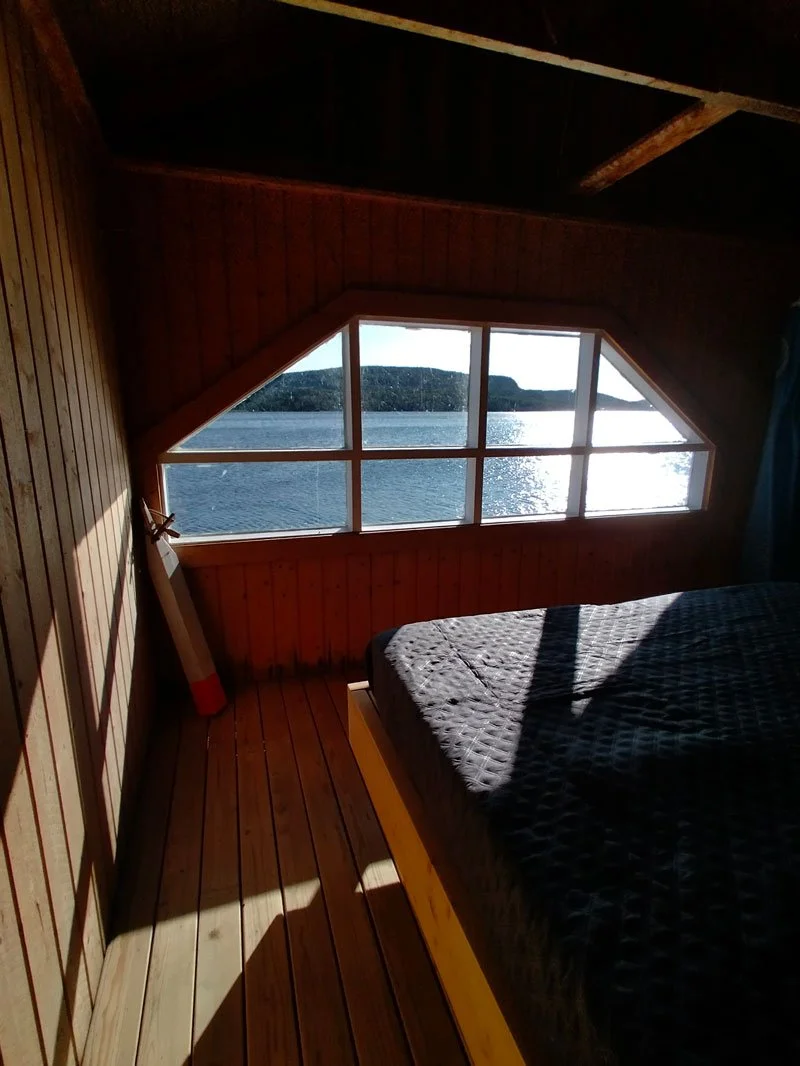
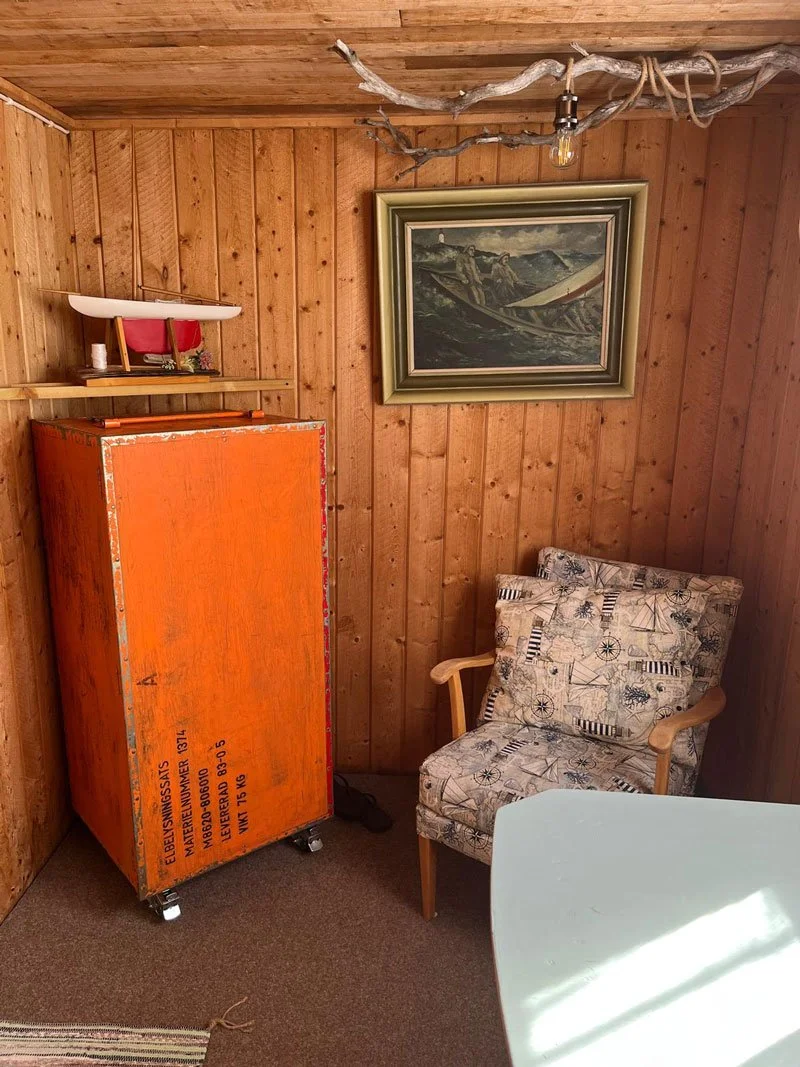
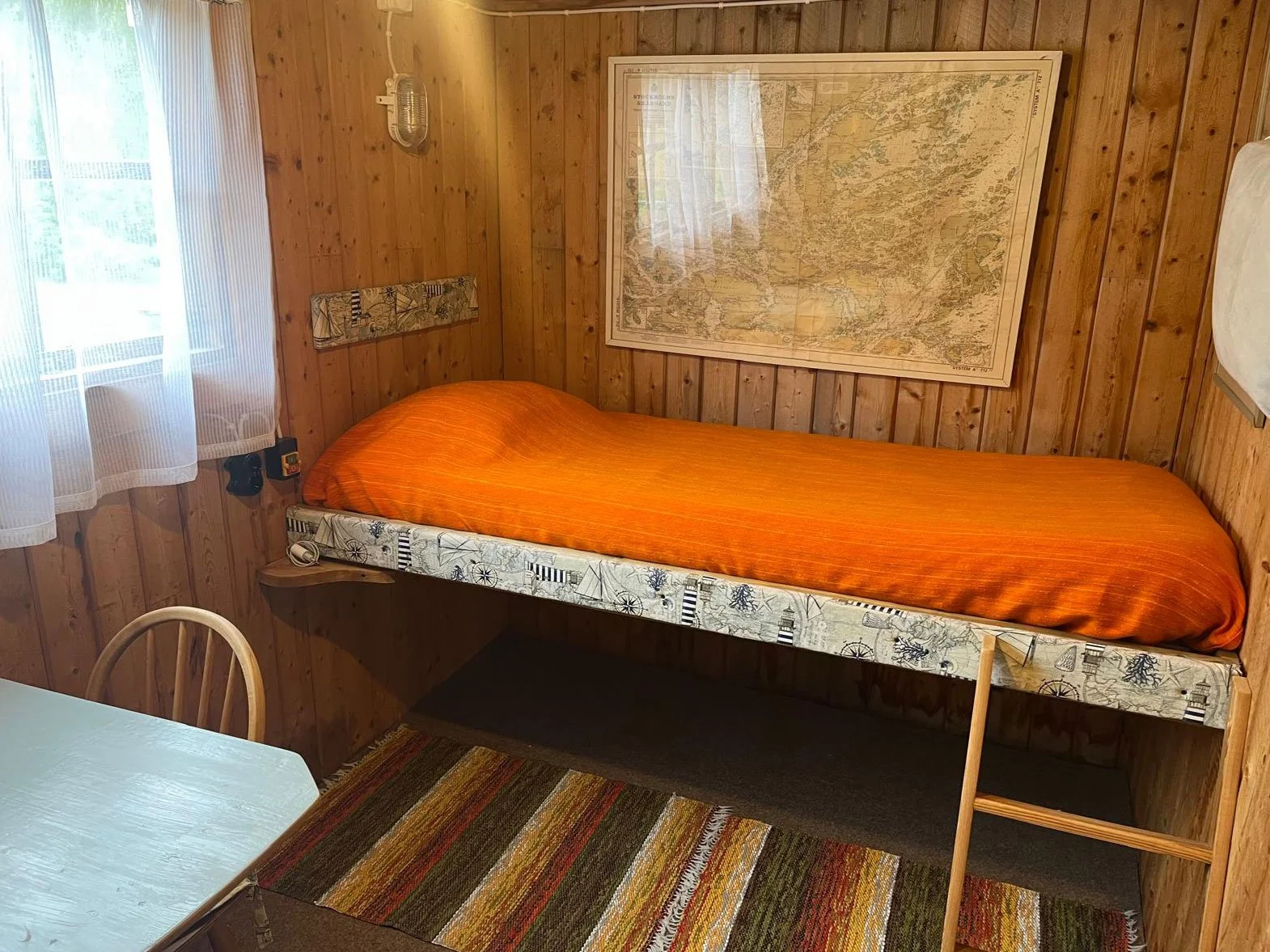
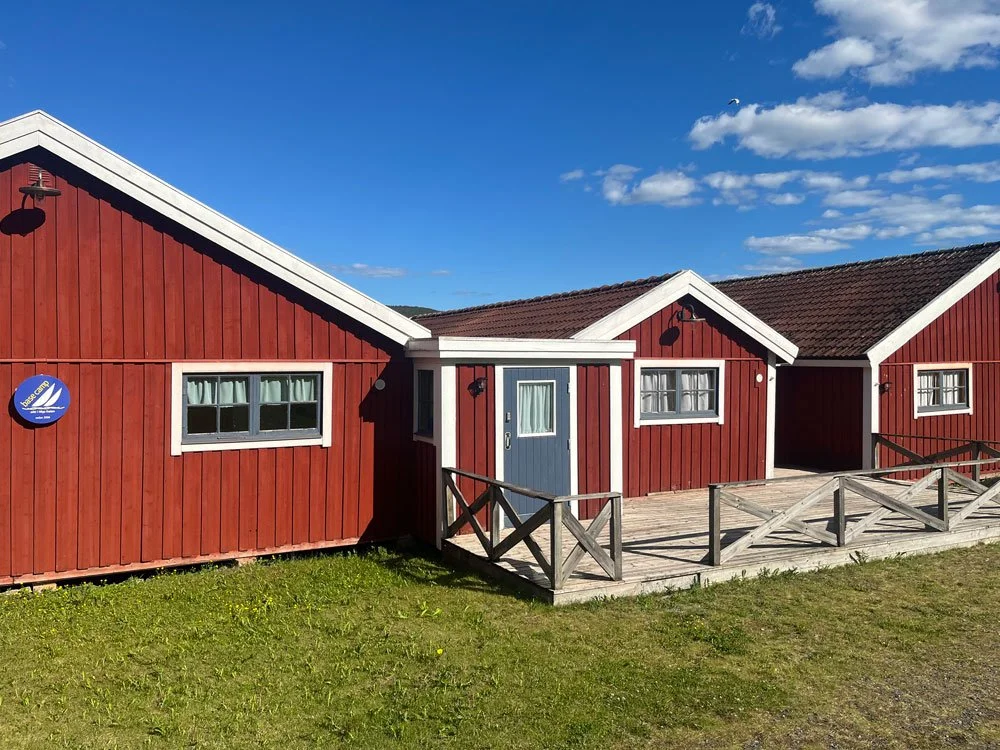
Boathouse, Dock House, and Guest House—simple stays by the sea.

Many of these day trips are easiest when you start early and travel light. If you want a calm base camp in Docksta, take a look at our Seasiders’ Lodgings.


Meet Your Host

Tommaso De Rosa

Want to plan your High Coast days with less guessing? Send me a message with your dates, travel style, and what you’re after (views, forest, swim, events). I’ll help you pick the right pins and simple day plans.

Find me on Airbnb (host profile + chat), or WhatsApp me at +46 76 3136909.

Workation, trails, Skogspaus, weather, pace—I’m here to keep it simple and real.

Start Here: High Coast (Höga Kusten) Day Trips from Docksta

Start Here: High Coast Day Plans from Docksta

Local guides for Höga Kusten — viewpoints, forest days, Via Ferrata, and concert access.

Most people arrive in Höga Kusten with the same quiet question:

“What should we do tomorrow — and how do we make it smooth?”

This page is for you if you’re staying in (or near) Docksta for a short time and you want one good day at a time: a clear plan, realistic timing, and fewer car logistics. Think of it as a “start here” hub for High Coast day trips — with viewpoints, forest days, and practical access notes.

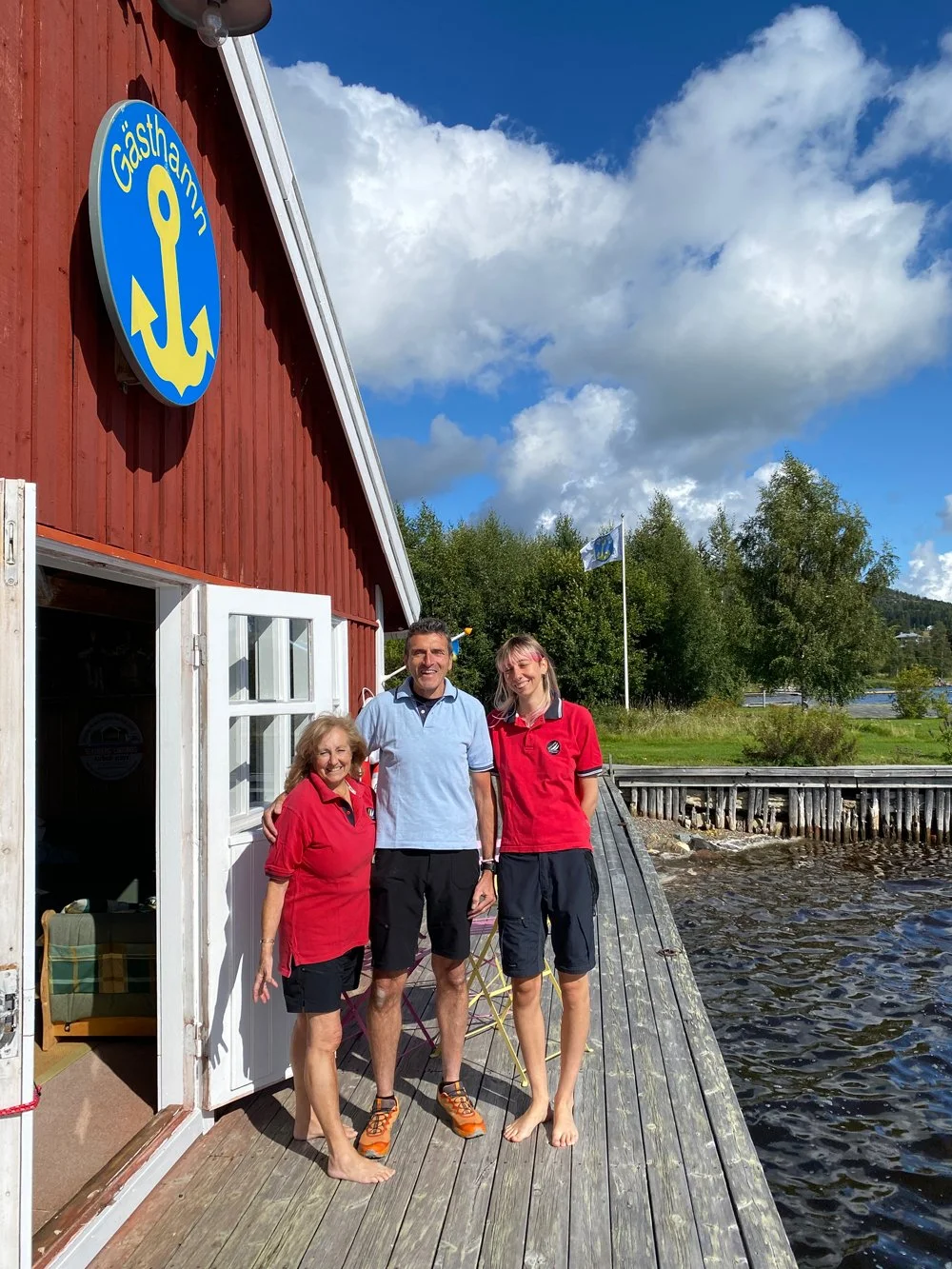
I’m Tommaso. I run Docksta Havet Base Camp — a small guest harbour and simple lodgings by the sea, right where the mountain and trail world begins. From here you’re next door to Skuleberget (concerts, chairlift, Via Ferrata, trails), close to the ferry to Ulvön, and within easy reach of Skuleskogen National Park.

Over the years, I’ve noticed that in Höga Kusten guests don’t really need more ideas — they need a calmer rhythm. Not because anyone is doing it “wrong”, but because this territory is wide, generous, and full of beautiful options, while most stays are short.

So two different styles naturally appear: one day feels light and spacious — a small backpack, one clear direction, realistic timing, a view you have time to receive, and enough quiet in between to actually be there. The other day becomes a bit too full — trying to fit “a little of everything” into limited time, moving more than arriving, driving from spot to spot and collecting places without really enjoying them.

That’s why I started writing these Guides & Stories: not to create a checklist, and not to turn your holiday into a “must-do” list, but to offer a few good pins for the day — simple plans, honest expectations, and local details that help your time here feel lighter.

And because many visitors arrive without outdoor gear (or simply don’t want to travel with it), we created Grab&Go: bike rental and ready-to-go kits at Docksta marina — plus the local advice that makes the plan work.


How to use this page

Pick your day by mood + time + legs — not by ego.

  • Want a classic highlight? Choose a big-view day.

  • Want a calm forest reset? Choose a quiet local pick.

  • Want a smooth event day? Choose the concert access plan.

Below are the six core guides we’re building the season around.


Quick summaries (SV/FI) — for Swedish and Finnish readers:

Swedish (SV): Det här är din “Start Here”-guide för dagsturer i Höga Kusten från Docksta. Välj en riktning i taget: utsikter, skogsdagar, Via Ferrata och konserter vid Skuleberget. Här hittar du sex utvalda guider, hela vårt bibliotek av Guides & Stories samt gratis kartnålar att ladda ner.

Finnish (FI): Tämä on “Start Here” -sivu päiväretkille Höga Kustenissa Dockstasta. Valitse yksi suunta kerrallaan: näköalapäivät, metsäpäivät, Via Ferrata ja Skulebergetin tapahtumat. Sivulta löydät kuusi tärkeintä opasta, kaikki Guides & Stories -jutut sekä ilmaiset karttapinnit ladattavaksi.


The 6 core Guides & Stories (our “Start Here” shelf)

1) Skuleskogen National Park (bike-first day plan)

If you want the wild heart of the High Coast — old forest, smooth granite, quiet bays — this is the day.

Read: Skuleskogen National Park (Bike-First Day Plan from Docksta) >

2) Skuleberget by bike (3 easy options)

Skuleberget is close, iconic, and surprisingly flexible. Choose your day plan by energy level and weather — not by pressure.

Read: Skuleberget by Bike (3 Easy Day Plans from Docksta) >

3) Via Ferrata Skuleberget (adventure day plan)

A real High Coast highlight: exposure, adrenaline, and big views. This guide keeps the day simple from Docksta — bike-first, daypack, calm rhythm.

Read: Via Ferrata Skuleberget: Day Plan from Docksta (Bike-First) >

4) Predikstolen viewpoint (Getsvedjeberget)

One of the most photographed panoramas in Höga Kusten — and yes, it’s worth it. But the final segment is short, steep, and a bit technical, so this post sets expectations honestly.

Read: Predikstolen Viewpoint (Getsvedjeberget): What to Expect >

5) Naturscen Skuleberget (concert access without parking stress)

Concert days are magic — until traffic and parking eat the vibe. This guide is for a smoother day: bike-first, simple timing, and a light plan.

Read: Naturscen Skuleberget Concert Access: Grab&Go Bike + Simple Plan from Docksta >

6) Nätra Fjällskog (quiet, wild forest day)

Done the classics? This is your quieter, wilder upgrade day. Deep moss, silence, space — and the kind of trail rhythm that feels like the north again.

Read: Nätra Fjällskog: The Wild High Coast Forest Day (Car-Light Local Pick) >


Optional: download free High Coast (Höga Kusten) map pins from Docksta (so your day stays simple)

If you like having everything in one place, we’ve put together a few free downloadable map pins we often share with guests — including Skuleberget, Skuleskogen, and Vårdkallberget.

They’re made to help you choose one direction, park less, and spend more time on the trail (or by the sea).


All Guides & Stories (browse the full shelf)

Think of this as the little library inside our base camp. Some posts are classic highlights, some are quieter local picks, some are “how to make it smooth” logistics. Browse, pick one good pin for tomorrow, and let the rest wait for another visit.


Grab&Go (Outdoor Ready): the practical part

If you arrive without gear — or you just want it easy — Grab&Go is our base camp setup at Docksta marina:

  • Bike rental (road + gravel ready)

  • Optional daypack / small essentials

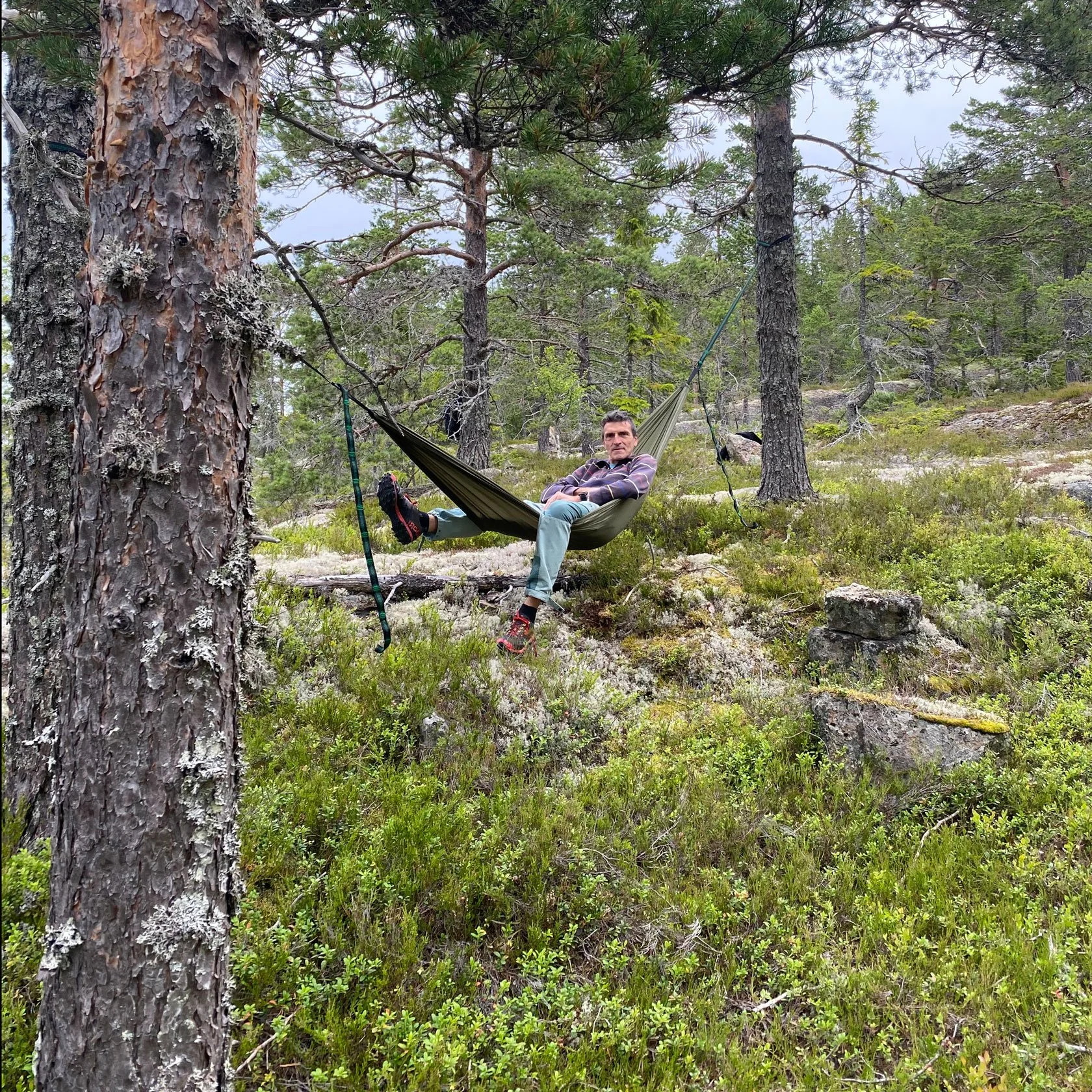
  • Optional hammock kit for a real “forest pause”

  • Local advice to match the plan to your time + weather

No booking required — just drop by.

Pricing & booking — details >

Want to be sure we’re around? WhatsApp — fastest reply >

 
Grab&Go guides & gear (start here):


A small note if you want to stay close to the trailhead

These guides are written from a very simple idea: a calm base camp makes the whole High Coast feel easier.

If you’d like to stay by the sea right next to Skuleberget — with Skuleskogen and Ulvön within easy reach — you can explore our Airbnb accommodations here: See our Docksta Havet lodgings


If you want a personal recommendation

If you’re unsure, send me:

  • how many hours you have

  • your energy level (calm / medium / big legs)

  • your mood (views / forest / adventure / event day)

The High Coast rewards the slower choice. Pick one direction, leave space for weather and curiosity, and let the rest wait for another visit.

Tommaso

Holiday in High Coast Sweden: free local guides in 5 languages

Discover multilingual mini-guides for your UNESCO World Heritage adventure

"When I first moved to Docksta in the High Coast (Höga Kusten), every sunrise over our marina reminded me why this place is so special. From the 295-meter summit of Skuleberget to the pristine shores of Skuleskogen National Park, this UNESCO World Heritage site speaks a universal language of natural wonder.

But I noticed something as I welcomed guests from around the world to our marina and accommodations at Docksta Havet Base Camp: while nature might speak to everyone, having a guide in your own language makes the experience even more meaningful.

That's why I created these free online guides - personal introductions to the High Coast available in English, Swedish, German, Finnish, and Italian. Whether you're planning to hike Skuleberget's five trails, explore Skuleskogen's hidden beaches, or sail our archipelago, you'll find local insights in your language."

From Personal Experience to Multilingual Guides

Every guide began with my own adventures: mastering Skuleberget's five paths (Eagle, Lynx, Bear, Elk, and Fox), discovering hidden viewpoints perfect for midnight sun watching, and finding the best spots for morning coffee with panoramic views. The real magic happened when I started sharing these experiences with guests from different countries.

Best of all? These guides are completely free and instantly accessible on our website. No downloads needed - just open and explore at your own pace.

Holiday in High Coast Sweden: your free local guide

Our free online mini-guides are available in:

🇬🇧 ENGLISH - Our comprehensive guide for international adventurers: Discover Nature Gems with Local Tips >

🇸🇪 SWEDISH - For our Nordic friends seeking local insights: Hitta dina äventyr på svenska >

🇩🇪 GERMAN - Helping German-speaking explorers navigate confidently: Entdecken Sie Insider-Tipps zum Weltnaturerbe >

For our neighbors across the Baltic and to bring my native perspective to Italian adventurers, here you find the 🇫🇮 FINNISH mini-guide and the 🇮🇹 ITALIAN version, too!


Easy access, anywhere

All our guides are web-based, meaning you can:

  • Access them instantly from any device

  • Share them easily with travel companions

  • Bookmark your favorite spots

  • Get real-time updates as we add new content

  • Start planning your trip right away

No apps to download, no payments required - just open and start exploring the High Coast from wherever you are.


Beyond Translation: Cultural Connection

These aren't just translations - they're cultural bridges. Each guide considers how different cultures experience nature, adventure, and hospitality. Whether you're:

  • Planning a challenging hike up the Eagle path to Kungsgrottan cave at Skuleberget

  • Seeking the perfect viewpoint in Skuleskogen National Park

  • Looking for the best spot to experience 'fika' with archipelago views

You'll find guidance that speaks to you, complete with links to relevant online resources for deeper exploration.


What Makes These Guides Special?

Local Knowledge: Every trail, viewpoint, and hidden gem comes from personal experience ✓ Cultural Context: Activities and experiences explained in culturally relevant ways ✓ Practical Tips: From weather considerations to Strava segments on Skuleberget ✓ Personal Stories: Real experiences that bring the High Coast to life


Real Adventures, Real Guidance

Each Guide Includes:

  • Curated hiking recommendations

  • Hidden viewpoints and photo spots

  • Nature connection locations

  • Local sailing insights

  • Accommodation recommendations

  • Seasonal activity guides

  • World Heritage site information


About your guide

Hi! I'm Tommaso, your local host at Docksta Havet Base Camp. Every summer, I have the privilege of welcoming guests from around the world to our UNESCO World Heritage site. Whether they're conquering the Eagle path at Skuleberget, finding tranquility along Vårdkallberget rocky pine forests, or sailing our archipelago, each visitor brings their own unique perspective to the High Coast.

Living here, I've noticed something special: when people explore nature in their native language, they connect with it more deeply. That's why I created these multilingual guides - to help you discover the High Coast like a local, in the language you're most comfortable with. From hidden wind shelters to perfect sunset spots, from challenging trails to peaceful marina moments, these guides (and I) are here to make your High Coast adventure truly memorable.

Ready to Start Your Journey?

See you on the trails or at the Sailor's Club House of the marina during the summer!

Tommaso :)

5 short favorite family walks in Docksta over the summer + 1 wild hike

These five easy and brief walks for families and nature lovers of all ages encourage them to explore spots and rich natural areas nearby Docksta, Skuleberget, and the national park Skuleskogen.

The suggestions omit all other challenging options that present rough terrain and steep segments. The paths are kid-friendly, but don't worry; you won't risk losing the best.

What could be more relaxing than to take a quiet stroll along a short segment of the Höga Kusten Trail track to reach Per Olsbo's shelter and picnic there amongst birdsong and a stunning view over the Docksta fjord?

The highlighted routes are perfect to enjoy the outdoors during spring and summer. Take all the time you need during your holiday to fully appreciate this stunning section in the heart of the World Heritage Site by embarking on one of the walks.


Here is my list of suggested family-friendly walks to take during your holiday in Docksta

📍

The descriptions of the routes on the maps begin from the marina.

#1 walk (or bike ride)

Naturum Museum Höga Kusten

This is the place to start learning more about Höga Kusten's inclusion on the UNESCO World Heritage List and to get information material and maps regarding the area's natural and scenic treasures, including its flora and animals.

On the walk to the museum at the feet of Skuleberget Mount, there is a lot of excitement for children. Just in front of the museum, there is a beautiful play area for the youngest: is on the theme "Höga Kusten" (...and also very much likes those a little too old). It’s a great spot for spending time together with your family.

The Naturum Höga Kusten Museum provides both permanent and temporary exhibitions about nature and geology within the World Heritage Site, coastal living, and the history of the High Coast. It has a modern and playful approach for guests with its distinctive information bars and activities. In the spaces of the museum, there is an educational playroom with information about animals and nature that is very fun for children.

👉 Here's how to make this stroll into an unforgettable hike inside the Skuleberget natural reserve if you want to extend the walk and reach the mountain's summit. (P.S. if you walk with children from the museum, the LYNX path uphill is recommended, and proper shoes, too :)


#2 short walk

Vibyggerå old church and the small lake in the woods

The church is located in Sätra, on the southern border of the village, immersed in pastures and meadows that open to the boundary of the surrounding forests. From there, starts the path that leads to Ullånger along the Höga Kusten Leden and that allows you to reach the beautiful wind shelter of Per Olsbo. From the opposite side of the church, the country road goes back to some farms and then goes into the forests surrounding Herrestaberget.

The old church of Vibyggerå is made of stones and lacks a bell tower, like many medieval churches in the area. It was likely built in the late 1200s or early 1300s. Beautiful seventeenth-century frescoes adorn the inside. The altar was built in 1771. The triumph crucifix is from the Middle Ages, while the pulpit was constructed in 1740.

While the church isn't constantly available for visits, the Vibyggerå parish hosts a number of events in the spring and summer that let you tour it inside.

TIP 👉 If you continue along the paved road to the farms to the right of the church, go back a little to Sätra, where you can enjoy a view of the fjord and surrounding fields. If you stick to the same road, it will cross the woods, and in a little more than a kilometer, you will arrive at the lovely pond Sätratjärn on the left. From there, the road is marked, where you can make a stop and enjoy the tranquility and beauty of the place.


#3 walk (or bike ride)

Docksta fjord (sunny side) “ut till Solvik”

This walk is the favourite for those who live in Docksta, which runs along the paved road that, from the end of the fjord, rises south along the coast opposite the village. It is a quiet path, made of a pleasant ascent, that crosses forested sections, holiday cottages areas, and panoramic points along the fjord. It is also ideal for cycling, but above all, it is excellently exposed to the sun, which can be for a long time, even in the afternoons and long summer evenings.

Starting from the marina, take the seafront to the shipyard, cross a small river on a bridge, and continue along the road that crosses the cultivated fields. Turn left, rising a little. Then continue to the left at the intersection, before turning to the right definitively on the road that leads you along the fjord to the south.

After about three kilometers, the road defines itself, taking you directly in front of Fäberget Mount and at the junction of the Docksta and Ullånger fjords. You choose how long to wander, and you can return whenever you'd like.


#4 mini-hike

Per Olsbo wind shelter

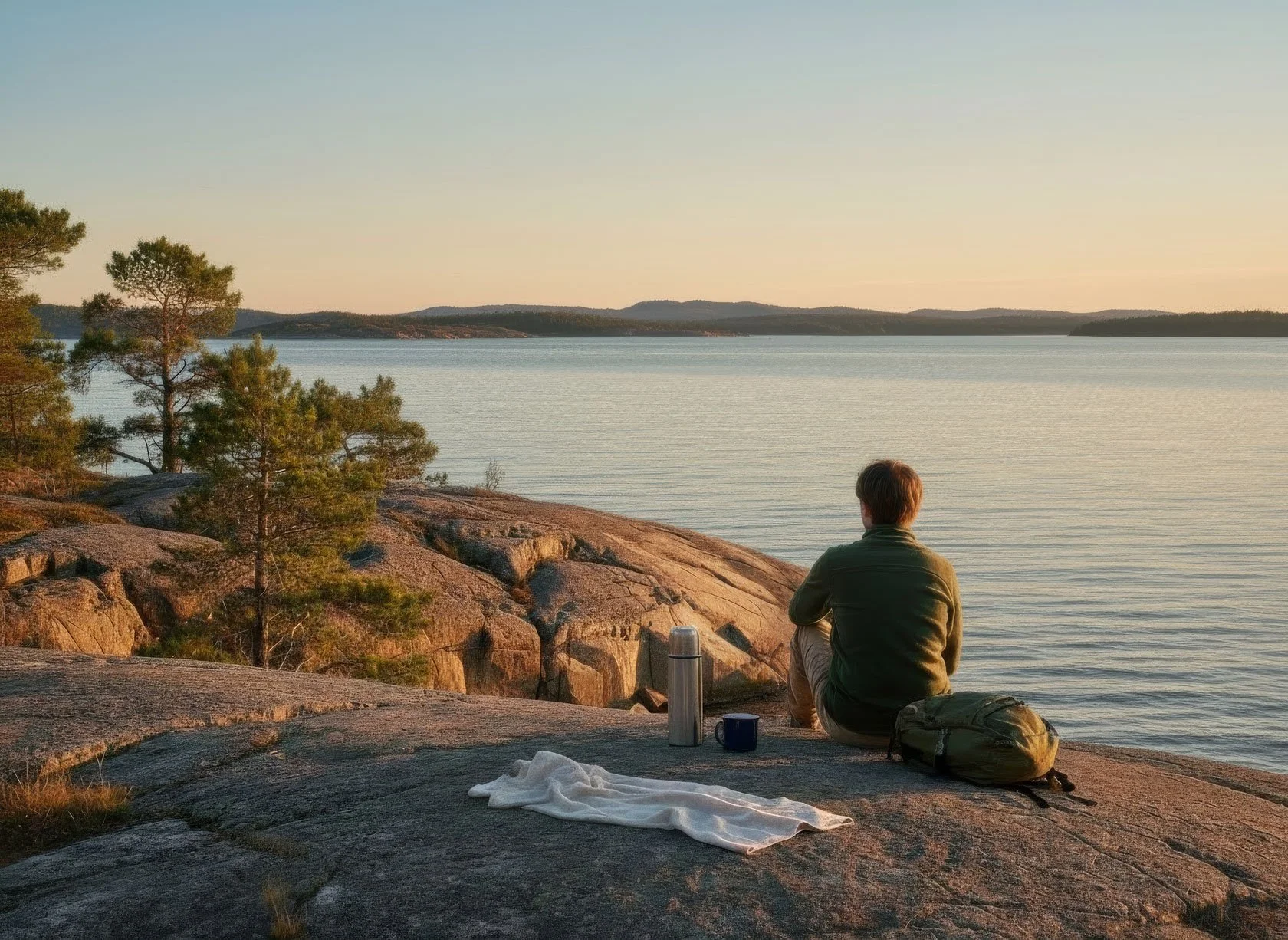
The section of the Höga Kusten Leden that leads to the shelter begins near the old church. This is a beautiful walk that, after first crossing the fields around the church and entering the woods, heads left to the panoramic spot over the fjord, where you may stop for coffee (I brought it ☕ with you in a thermos) and take in the view.

You can read a more thorough account of this amazing hike to the wind shelter right here > I highly recommend you walk it if you happen to be in Docksta 👍


#5 hike

Skuleskogen seaside

This is a really rewarding hike - suitable for walkers of all levels, over this unique seaside paths on the High Coast drawn between the forests and the coastline within the national park. You can immerse you in ancient woods, taking a forest bath along the magnificent well-signed path that is carved out of the forests just a short distance from the bay's water.

It is the walk to take first thing in the morning, when the sun rises in the east, and shines through the tree branches while walking a few steps from the ocean. There are several rest spots along the way for when it’s time to stop for breaks, and you have the option of swimming along the sandy beaches. Leave your car or, even better take the bus to the South entrance of the park: this walk starts from the sandy bay of Kälaviken and heads toward Näskebodarna along the coast.

P.S. 👉 These pathways along the sea into the national park are ideal for Nordic walking if you enjoy using your sticks.

You can download a map of the national park here and read about an excursion that is a little more challenging but will take you to some of Skuleskogen's most breathtaking locations here.


…plus one wild trail at Vårdkallberget

This last suggestion is for those looking for more of natural features, and it's a real family-friendly wilderness experience immersed into a rocky pine forest just a few walks from the village.

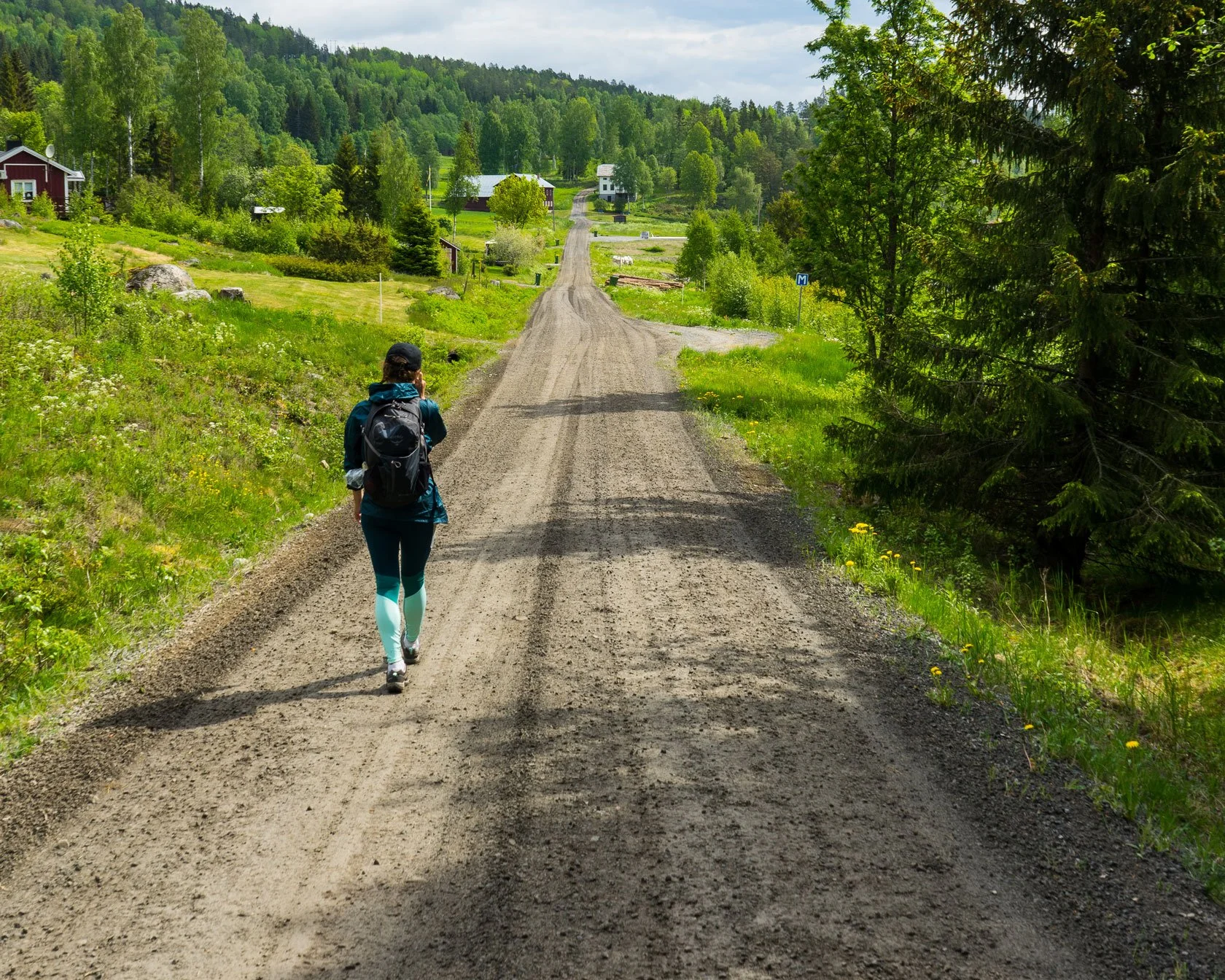
You can start hiking up the path in Myre. You can walk or drive there (parking is available prior to the antenna) starting from the marina.

Read here first a dedicated description of this amazing hike at Vårdkallberget Mount in Docksta, then pack a light rucksack, lace up your hiking shoes, and head out onto Vårdkallberget summit along its wonderful family-friendly wild trail!


🌲

TIP 👉 Spend your time in the woods, taking your time. Tie your hurry and stress to trees. Enjoy a relaxing SKOGSPAUS >

📍

TIP 👉 The wilderness in Höga Kusten is usually approachable, but don't overlook the basics of hiking gear and preparation >


SET YOUR BASE CAMP TO EXPLORE THE HÖGA KUSTEN WORLD HERITAGE SITE:

📍

These waterfront Airbnbs are situated just a step away from the Skuleberget Mount and close to Skuleskogen National Park.

Based in Docksta for your vacation, you can walk to the trails that lead you to the summit of Skuleberget Mount, and you will be close to the national park Skuleskogen. You can also easily get around by car or by bus, and you will be in the ideal location to start exploring the area. 👉 Take a look at our vacation Airbnb accommodations by the seaside >

Tommaso De Rosa

See my host profile and contact me on Airbnb

If you would like assistance planning your stay in one of our waterfront accommodations at the marina, need hiking advice at Skyleskogen Park or Mount Skuleberget, or have any other questions regarding things to do on the High Coast during the summer, please contact me via the Airbnb chat. You are welcome :)

_Tommaso

Please write me by email or WhatsApp at +46.763136909


📍

Other recommended outdoor activities:

How to get to Docksta, Höga Kusten, by flying to Sweden at Stockholm

🛬🇸🇪

You land at Stockholm International Airport Arlanda, which is roughly 40 minutes from the downtown center of the capital. You can go to Höga Kusten from there in at least four ways: by car, by train, by bus, or by air.

Docksta is located in the north of the country, about 500 km from Stockholm. The village, in the heart of the High Coast World Heritage Site, is crossed by the main north-south connecting route, the E4.

Docksta is very well connected to the buses that run north-south the coast of the country. Long-distance buses reach the capital at Stockholm City Terminal or the Arlanda Airport, and regional bus connections make it convenient to reach the cities that are on your public transport route: they are Sundsvall and Härnösand (you get there by train from Stockholm), or Örnsköldsvik if you arrive from the north.

In the village, there are two stops for these buses, "Docksta Marina" 50 metres from us, and "Docksta Busstation" right next to the ICA supermarket a few hundred meters from the marina.


How to get to Docksta?

You just have to choose:

1# 🚍

Docksta can be reached by bus departing from Arlanda (or from Stockholm City Terminal), the journey takes over 6 hours. If it fits your travel times, the bus can be cheap, there's usually free wifi, and best of all, you don't have to drive—just unwind and take in the scenery (much like on the train).

Find more at www.ybuss.se


2# 🚄+🚍

From the airport at Arlanda, you can also go straight by train to Sundsvall or Härnösand, from where you can continue by bus, which leaves from the destination railway stations. Buses take you to Docksta, the stops at are just a short distance from the marina.

In example: Arlanda Central Station 🚄 -> Härnösand station 🚍 -> Docksta busstation

TIP 👉 To ensure that the bus service is truly available on the day of your choosing, check and make your reservation in advance.

Find more at: www.sj.se (search your journey from “Arlanda C” to “Docksta”)


3# ✈️+🚍*or🚙**

When you land at Arlanda (ARN) on an International flight, you can reach the airport area where domestic flights depart: there are sixty-minute flights with SAS to "Midlanda” (Sundsvall/Härnösand Airport), alternatively, you can look up flights with SAS to Örnsköldsvik.

* From the airports you have to take a taxi to reach the bus terminals. The bus will take you to Docksta. Make your reservation of the bus in advance and confirm that the service is actually available on the day of your choice.

** Alternatively you can rent a car. Distances from the airports: Midlanda (SDL) -> Docksta: 98Km; Örnsköldsvik (OER) -> Docksta 61Km

Find more at: www.sas.se


4# 🚙

In Arlanda, you can also rent a car and drive to the High Coast on the highway (E4). The drive from the south to the north—through forests mostly—is a pleasant trip in and of itself. 462 km to arrive in Docksta from the airport; simply follow the E4 to the north (with direction North -> Sundsvall/Haparanda).

See also, car rental at Arlanda airport, Stockholm (by economybookings.com)

This latter case is particularly an option to think about if you're not a solo traveler. If you are traveling with other people, renting a car together can make it easier and more convenient for you to get around and explore freely on the High Coast.

The area of Höga Kusten is very large; only its coastal portion expands across a distance of around 100 kilometers to the north and south. There are many of locations that you will like to visit, but unless the purpose of your holiday is to go trekking—a beautiful mode in this natural setting—you will value having a car available for your trips.

🚙 In the north of the country, tähe traffic is generally minimal. You will be able to take in the breathtaking scenery of Sweden, which includes huge forests and dazzling lakes. Particularly in more isolated places, keep an eye out for wildlife when driving. 


TIP 👉 Moving to Sweden during the summer holidays in particular requires careful planning of your travel. Whether it’s flights, train tickets, or buses for the main destinations, remember to make all reservations in advance, in any case, before you start your trip.

TIP 👉 Pay attention, on public holidays and on Saturdays in particular, to the actual availability of public transport services (especially buses); routes and schedules are often reduced: to be sure, book and buy your tickets in advance :)


Do you know how to get to the marina when you arrive in Docksta?

This is our address:

👇

Docksta Havet AB - Hamnen, 10 - 87396 Docksta

It's simple because we are on the seaside right in Docksta, about 100 meters from the pier of the ferry to Ulvön Island and the bus stop "Docksta Marina".

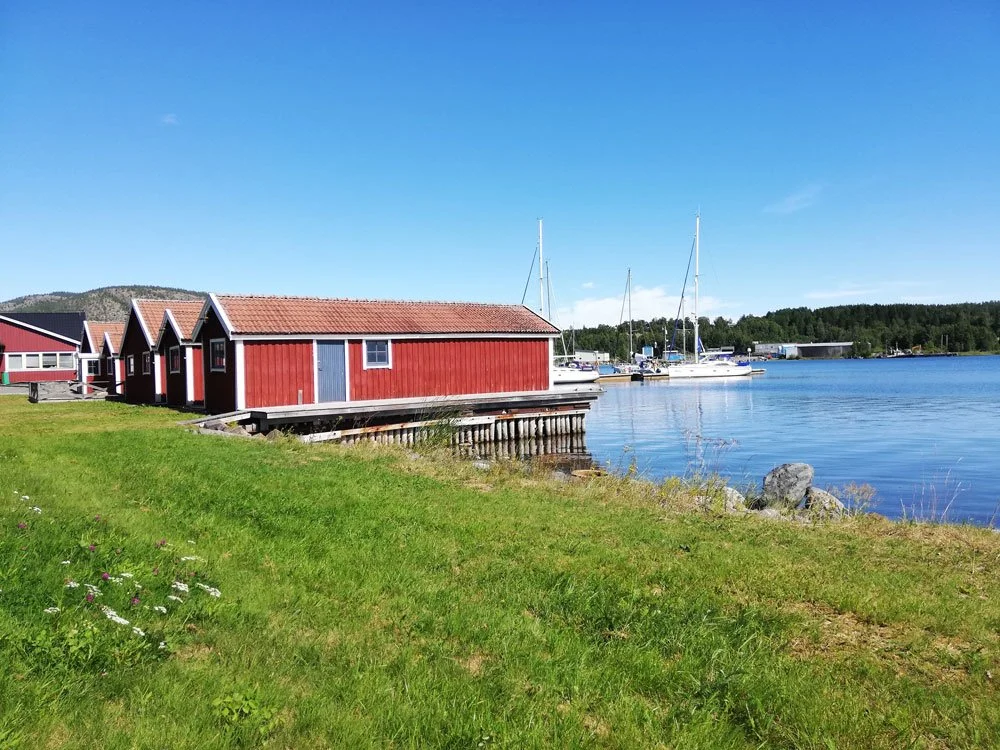
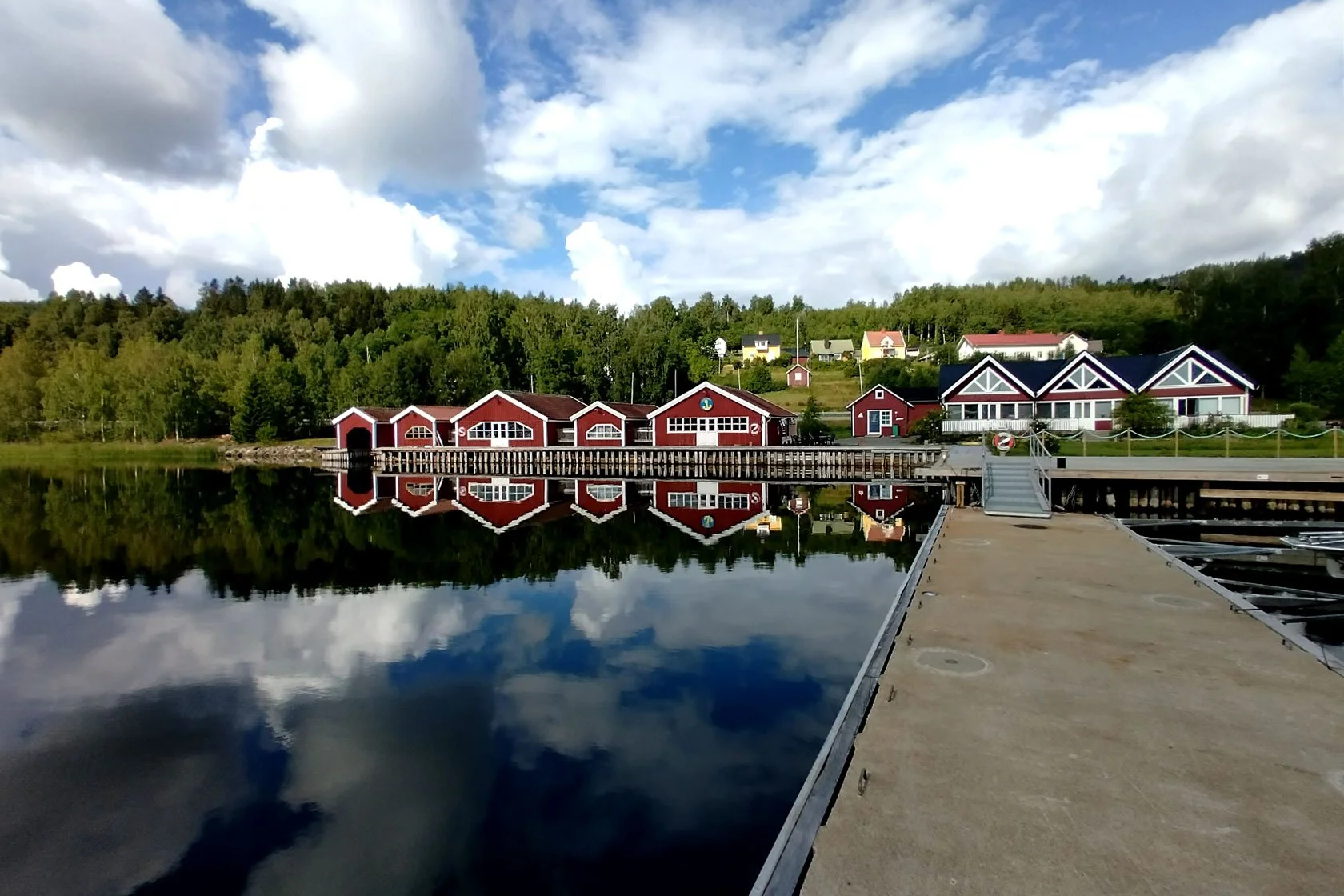
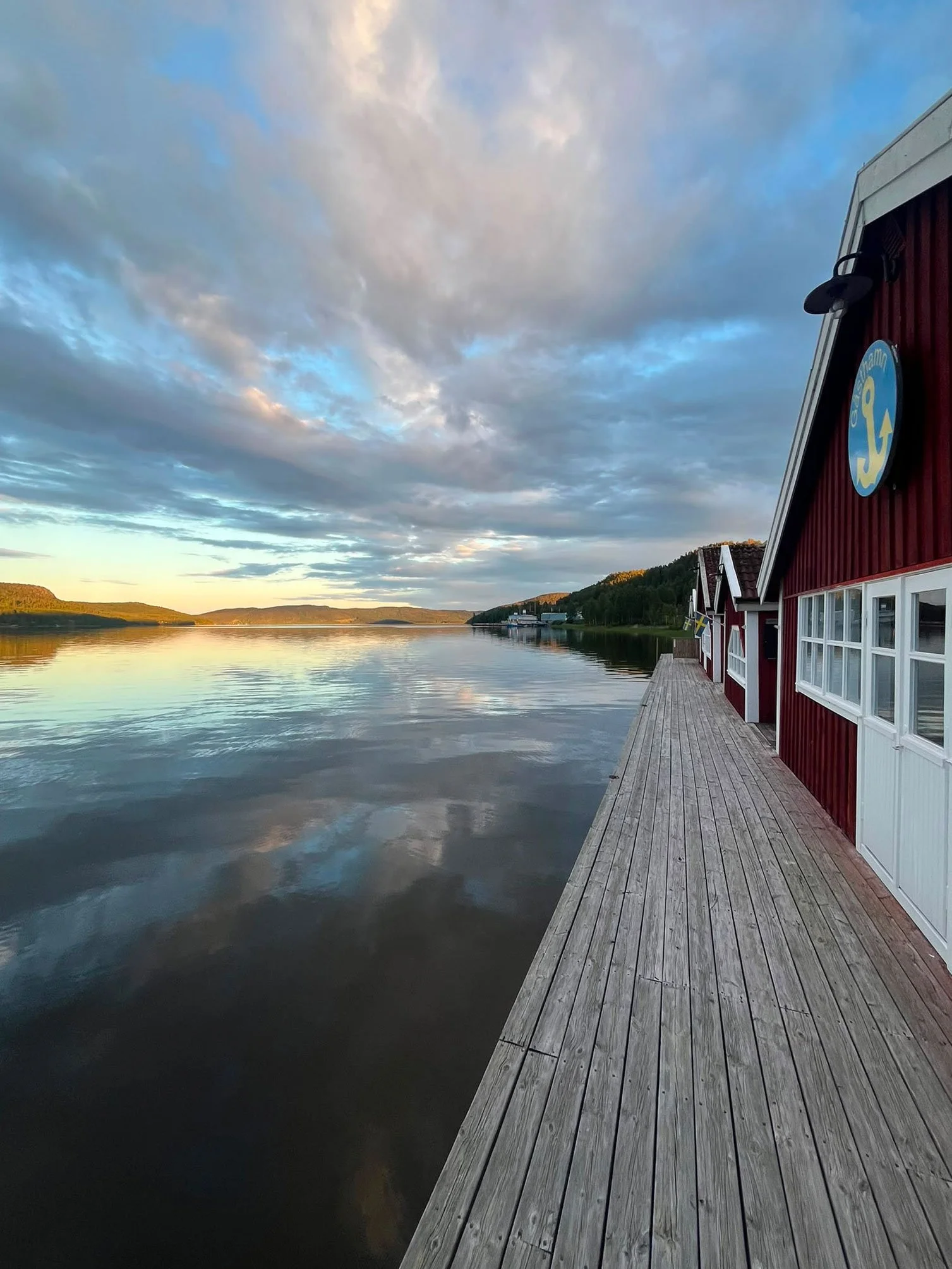
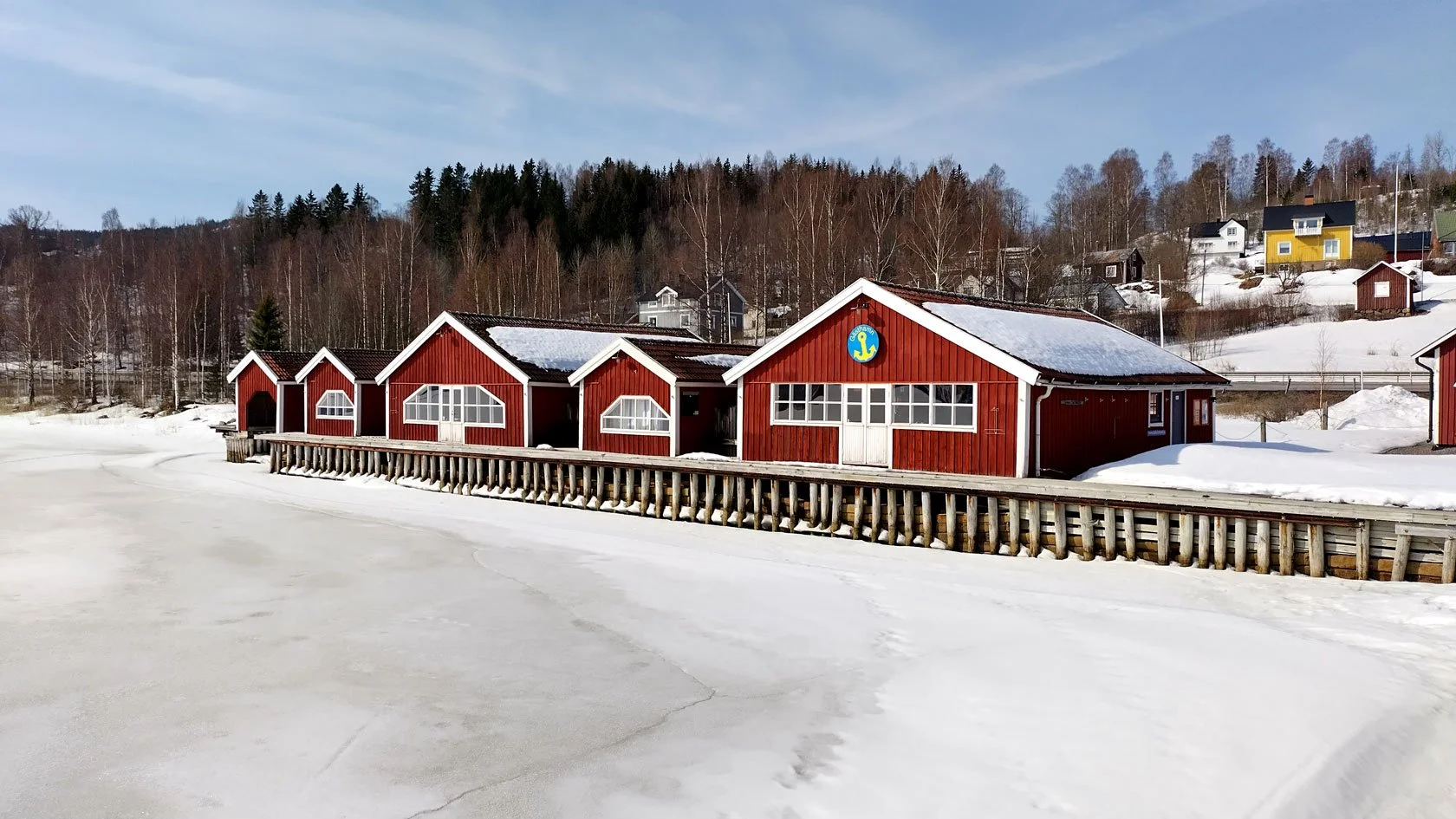
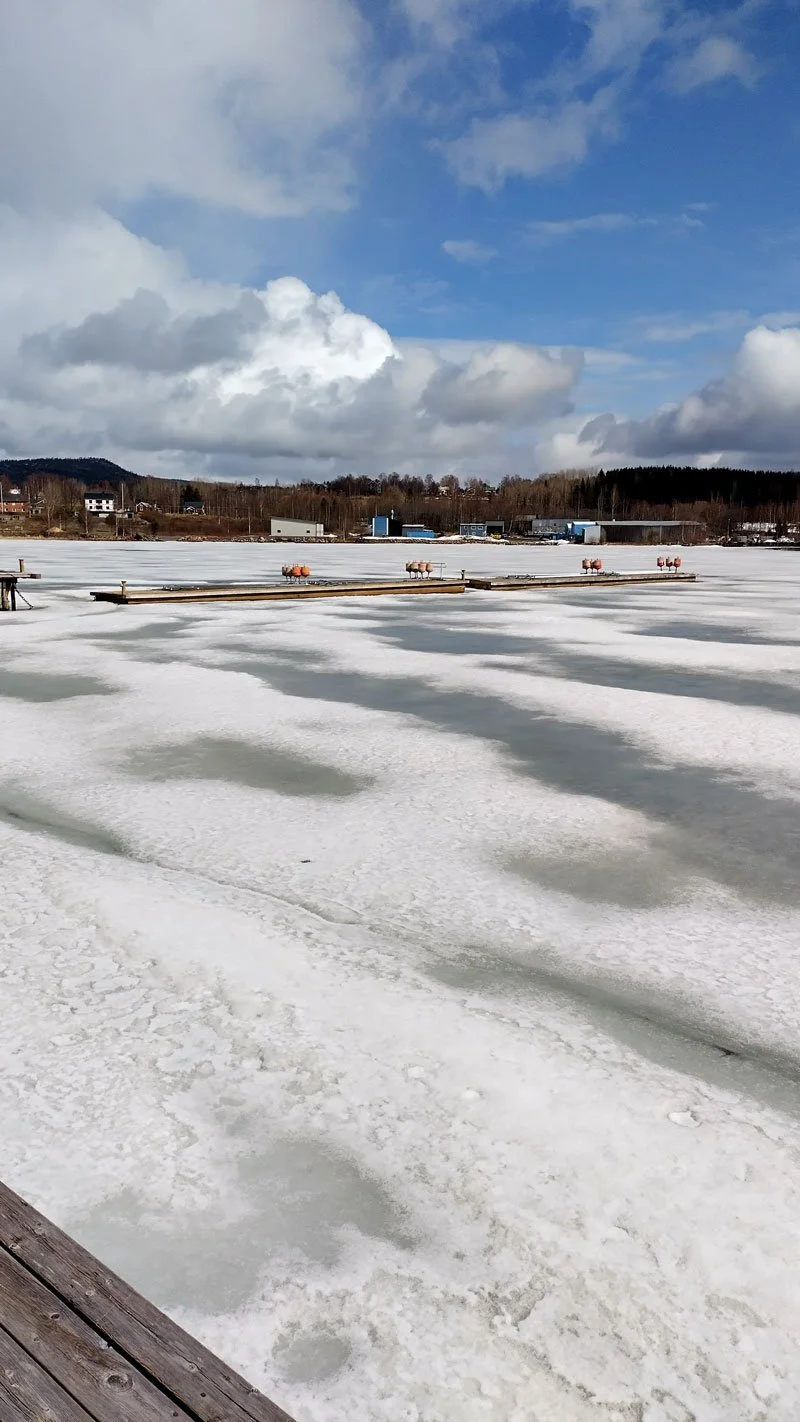
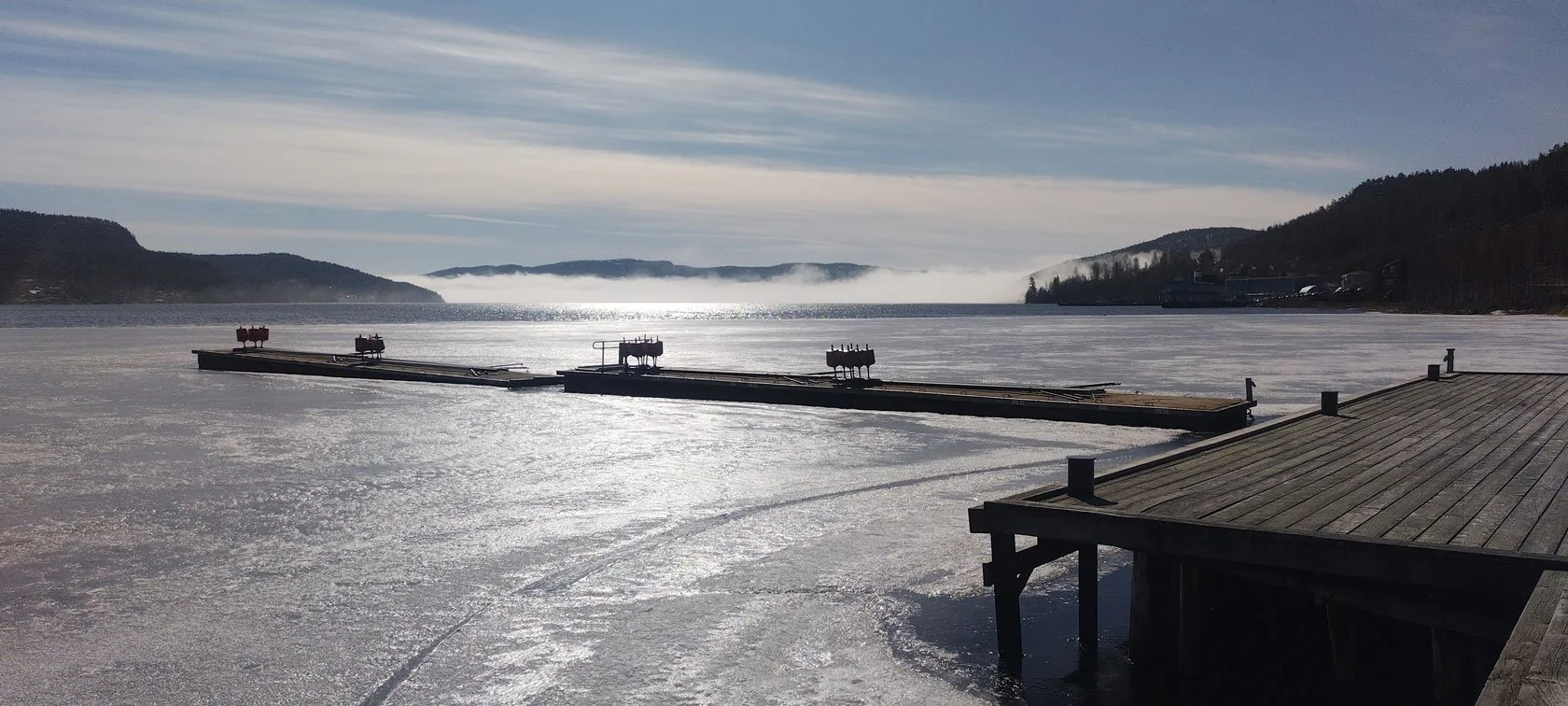
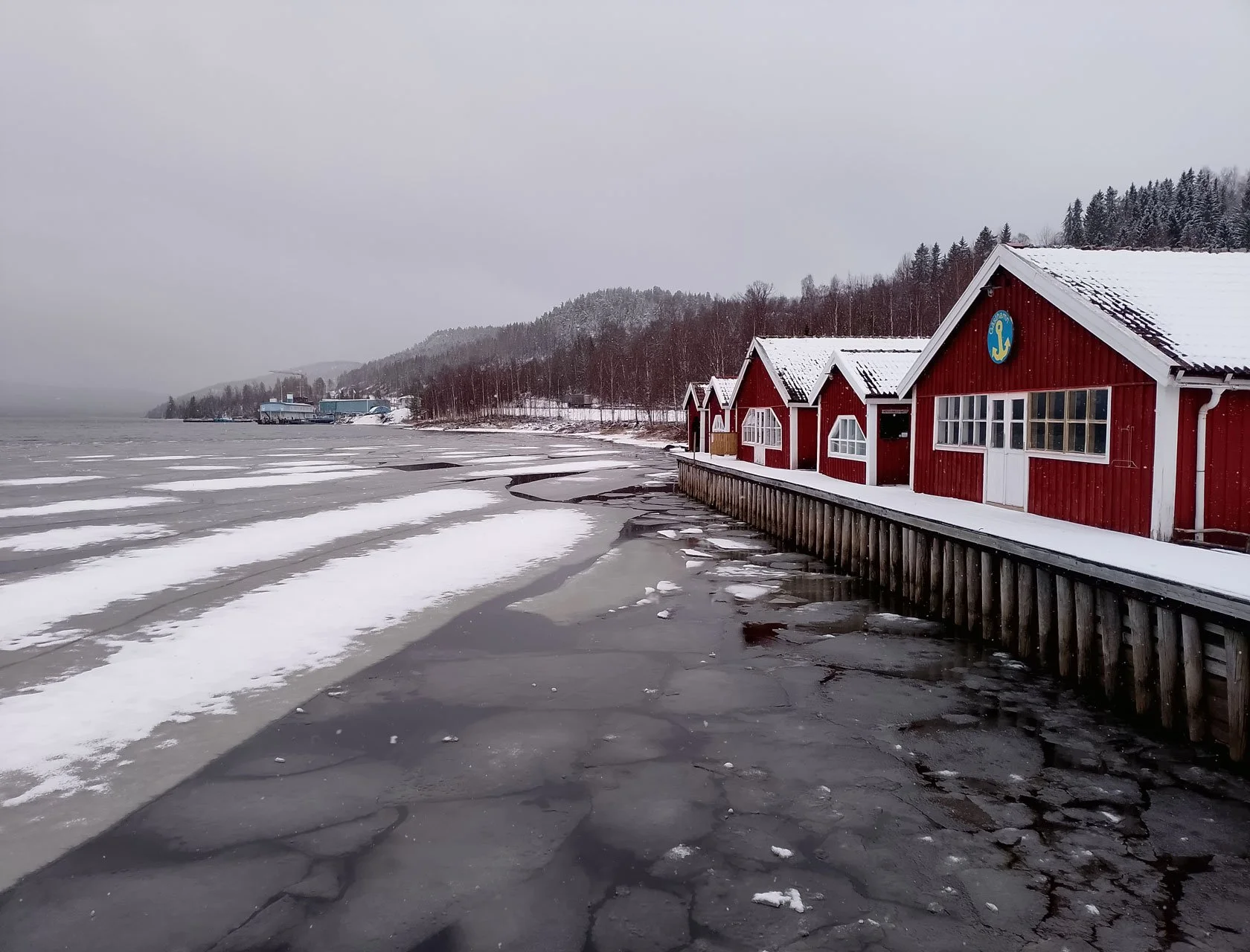
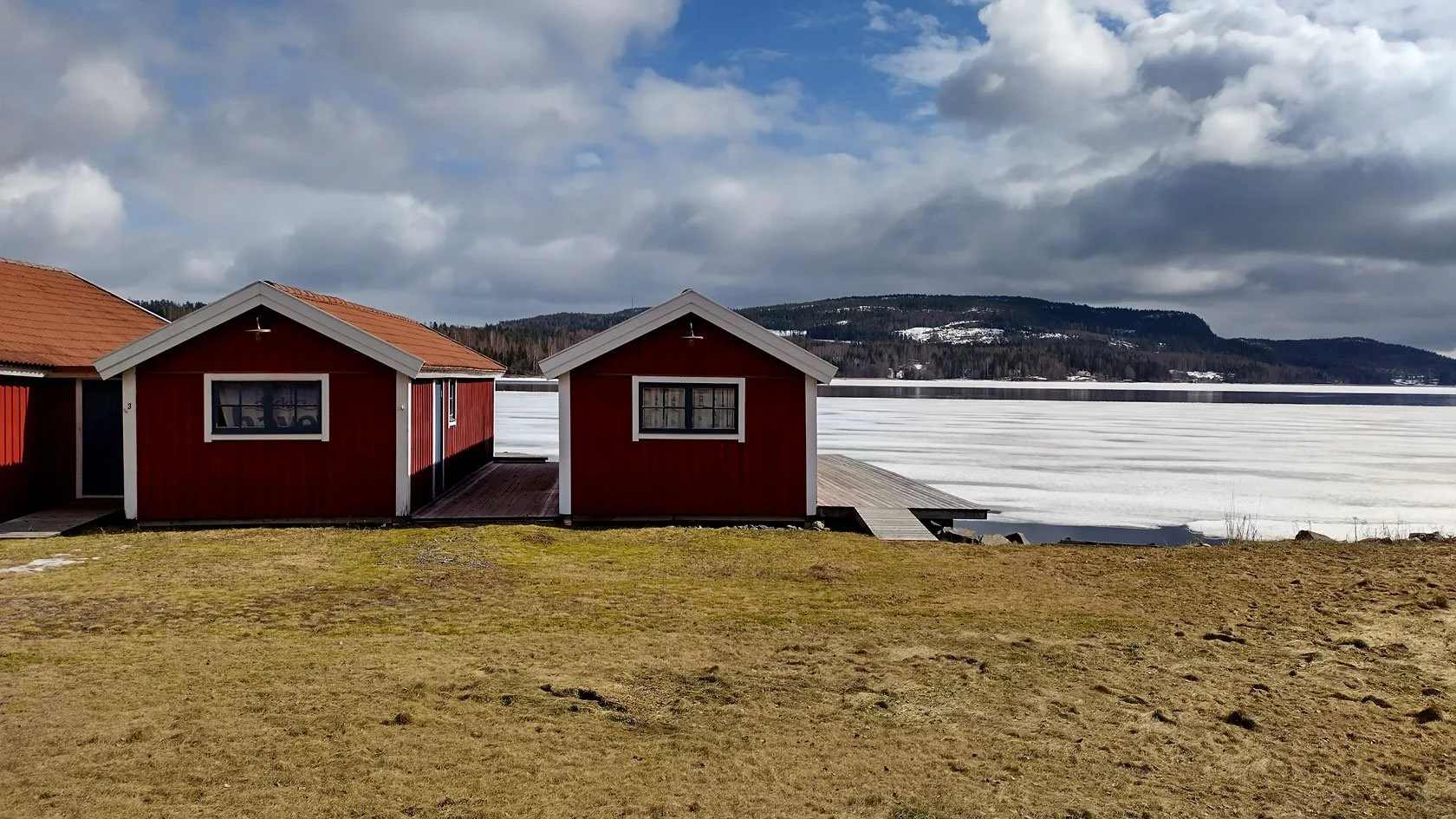
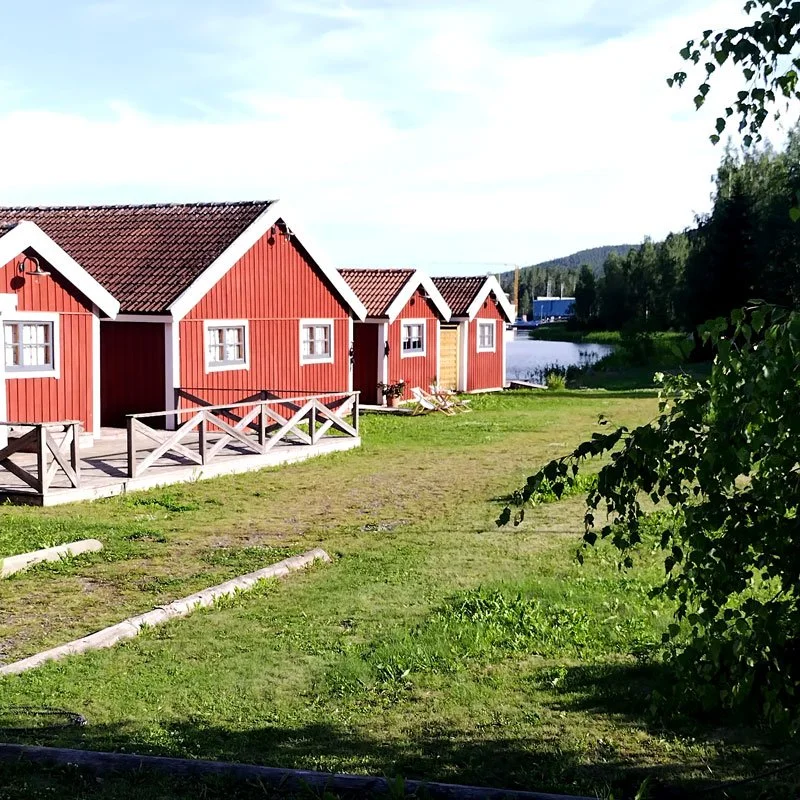
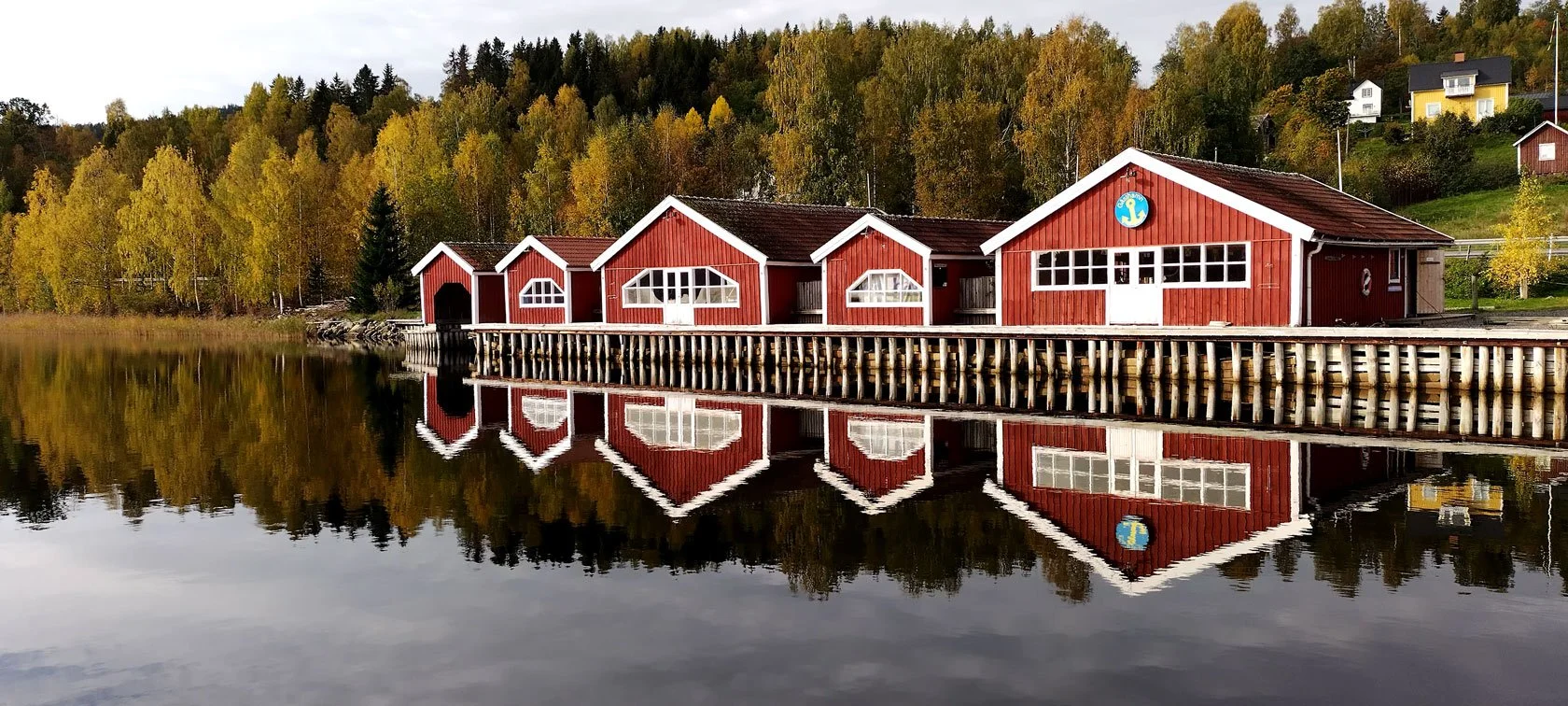
When you arrive in Docksta on the E4, just at the end of the Dockstafjärden in front of the village, you will see our floating wharfs, the docks and boathouses, and the main red building with light blue signs (with www.dockstahavet.se) on its roof.


I hope that this blog article was helpful for you. I looked at the many ways to go to and from Docksta and Arlanda International Airport, so you can make an informed decision based on your timetable and budget to travel to the High Coast during your holiday.


Rent one of these unique vacation rentals to maximize your trip to the High Coast:

Located near the Skuleskogen National Park and the Skuleberget Mount, these seafront Airbnbs are situated at the Docksta marina. The coastal lodgings are in an ideal location for exploring the Höga Kusten World Heritage site.


Tommaso De Rosa

See my host profile and contact me on Airbnb

If you would like assistance planning your stay in one of our waterfront accommodations at the marina, need hiking advice at Skyleskogen Park or Mount Skuleberget, or have any other questions regarding things to do on the High Coast during the summer, please contact me via the Airbnb chat. You are welcome :)

_Tommaso

Please write me by email or WhatsApp at +46.763136909

P.S. I’m a trail runner. I like to explore new routes with a hiking mindset, especially those on the High Coast. Here below you find what I highlighted in these blog posts.

👇

Superior panoramic views of the High Coast World Heritage archipelago

If you are planning a vacation on the High Coast and you love hiking, Docksta is a great place to start, making it your base camp to explore some of the most stunning trails on the World Heritage site.

Which destinations would I suggest? First, the Skuleskogen National Park and the Skuleberget Mountain Nature Area.

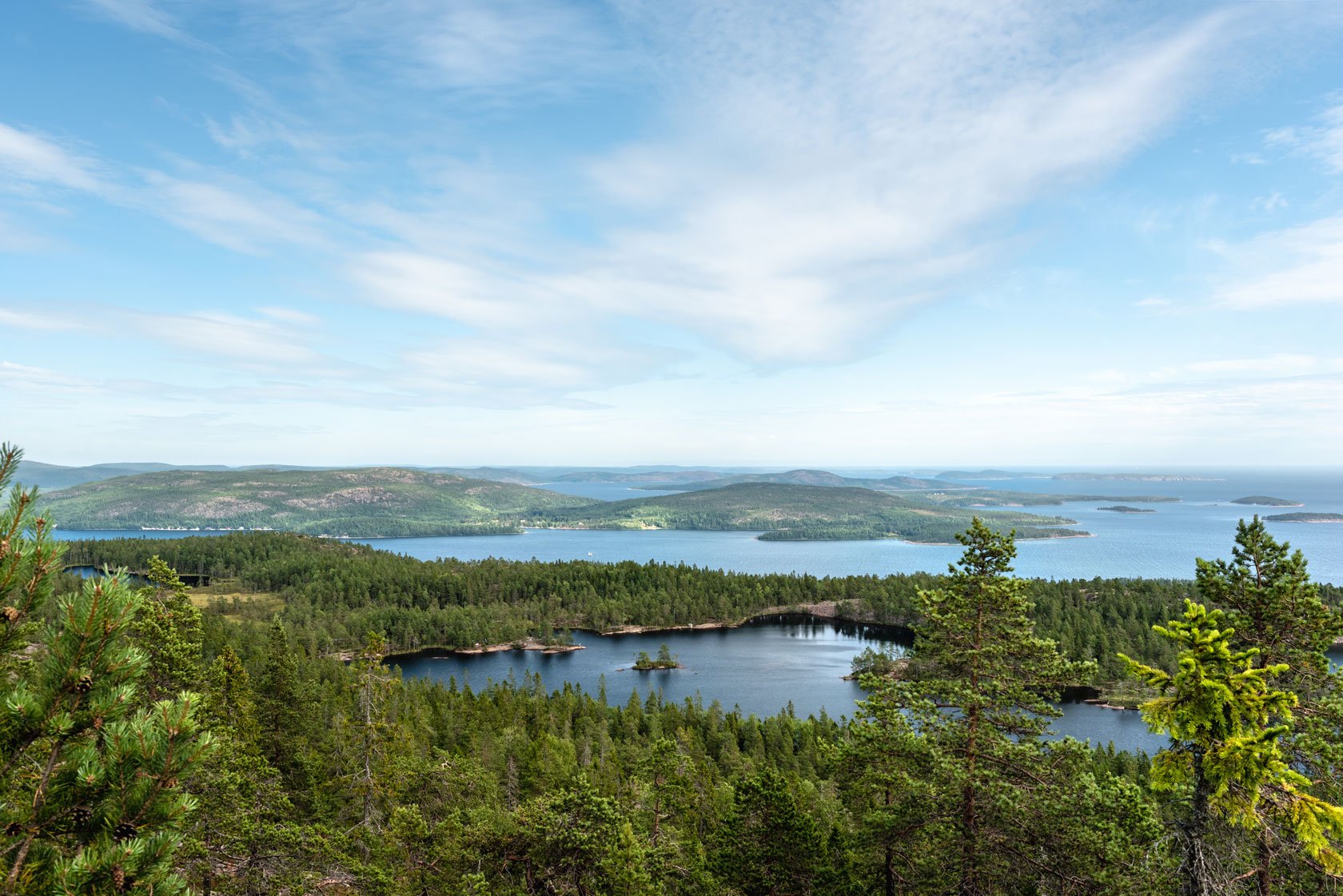
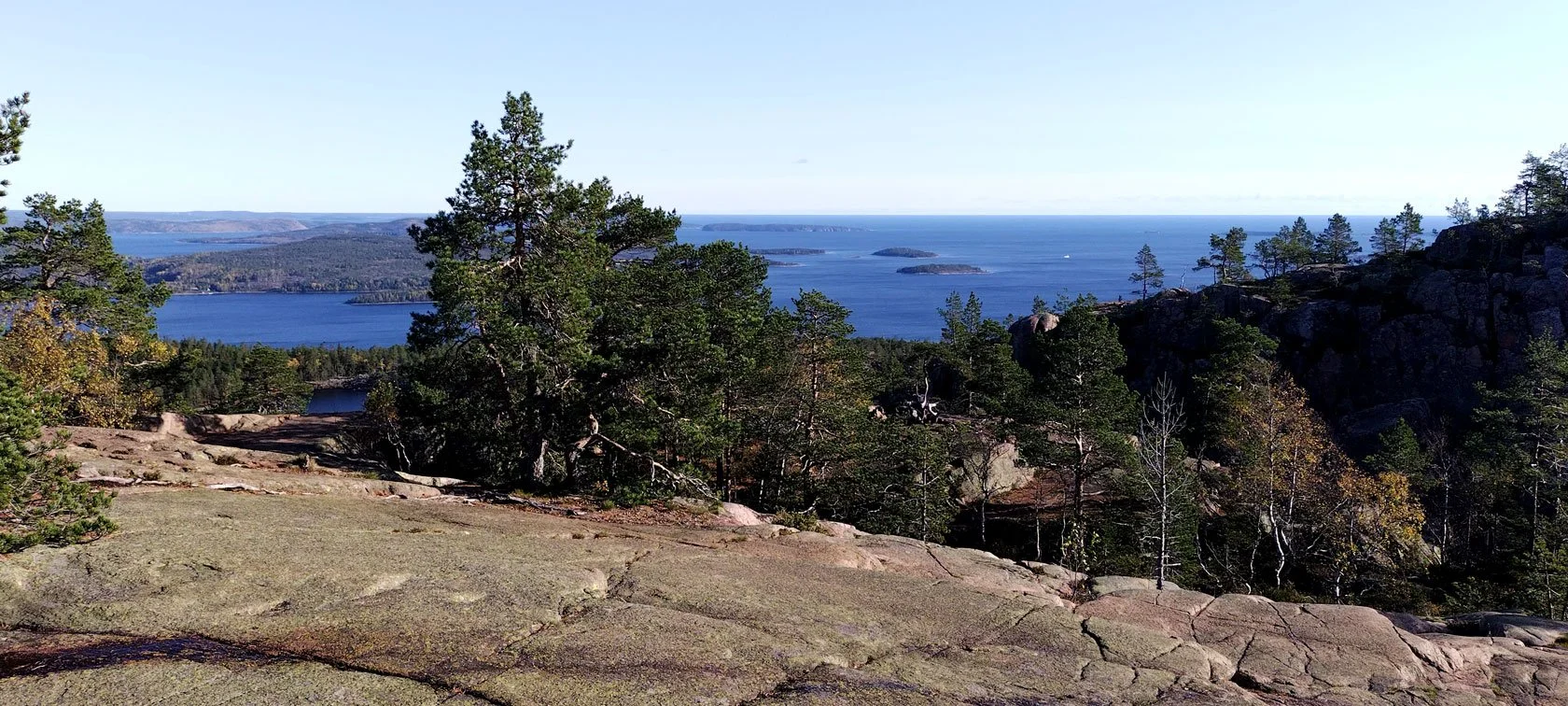
The list of summits is as follows: Skuleberget, Slåttdalsberget at Skuleskogen, Getsvedjeberget, Vårdkallberget, Fäberget, and Herrestaberget. From these mountains, the sweeping views of the archipelago are breathtaking.

They're all well worth the effort, but you'll probably have to decide which to focus on during your excursions. So, the following information may be helpful to you :)


Hiking to the best 6 viewpoints offering sweeping views of the Höga Kusten archipelago

All of these are a few-hour excursions, except for the one to the national park Skuleskogen where you will do well to devote an entire day.

Generally speaking, I advise you to leave the car parked and point out a few of these stunning mountains' peaks, which you can even reach on foot, starting from Docksta.


Skuleberget

296m above sea level

You can absolutely not miss the Skuleberget mountain; there are five gorgeous trails to reach its summit.

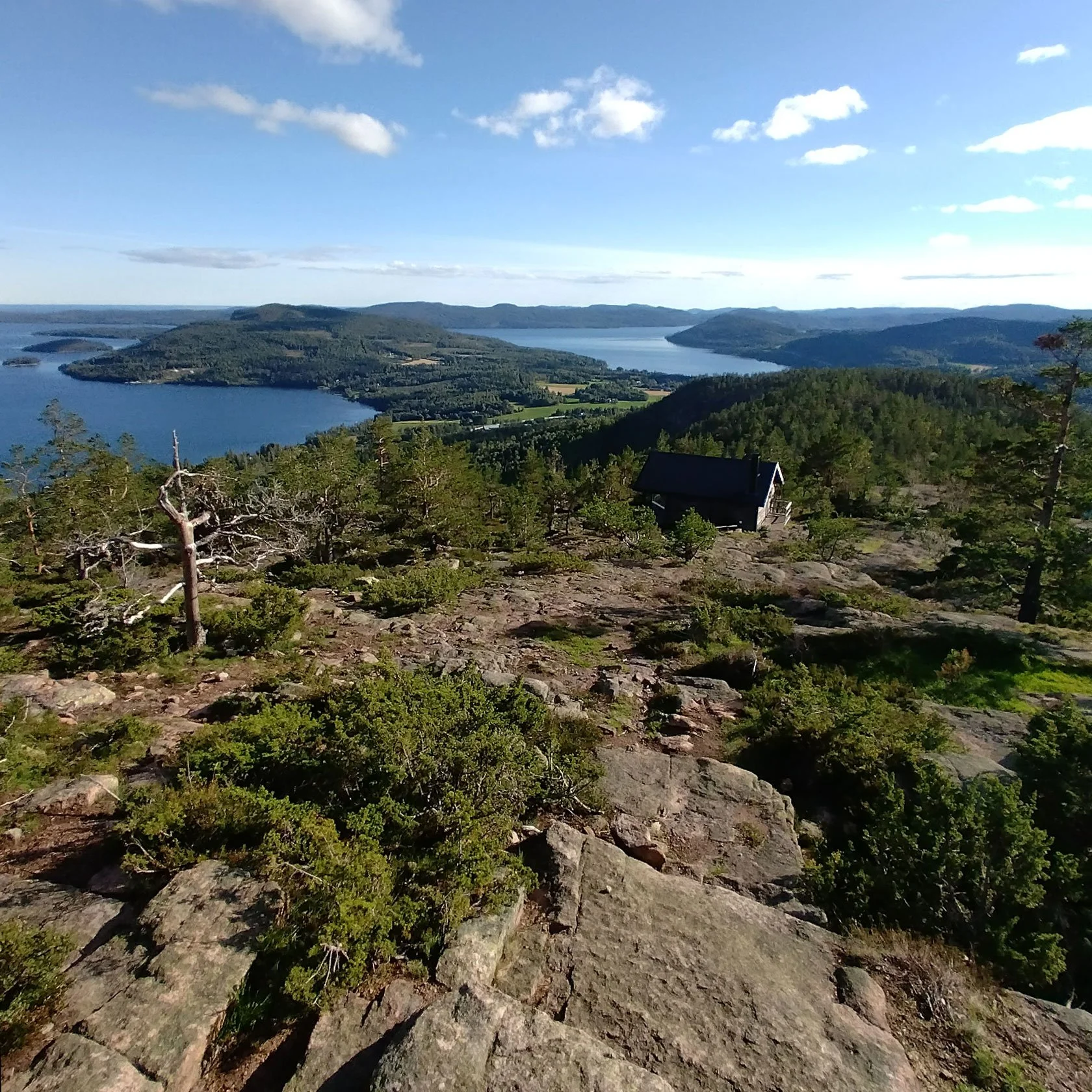
At the top, the circular path marked with red dots and named Kalottstigen allows you to walk, at 286m a.s.l., along the anchient coastline (it is the world’s highest point of land to have been uplifted by a postglacial isostatic rebound). Here you will enjoy some of the best overview points of the High Coast World Heritage.

It is a short walk or bike ride from the Docksta marina to the base of the mountain, which is less than two kilometers away.

I suggest you go up the east side, where there are the Naturum Museum and the Via Ferrata, because from there two unforgettable paths start: the "Eagle" (Grottstigen) and the "Lynx" (Östra Bergstigen).

  • The first begins just besides the museum; it is the steepest and takes you on top in just over 800m. The view towards the sea is incredible. It is a challenging path; at some points you will find iron steps in the rock, you will have to walk on large massifs, and you will also have to use your hands. It's not a climb, of course, but I don't recommend it if the ground is wet, just as I'd avoid going through it to get down.

  • The second option starts just under a kilometer north of the museum, following the Höga Kusten Leden. It climbs up the mountain through the beautiful forests of the natural area and, turning around the north side, offers a couple of truly unique sights, eastward and then towards the national park.

To return, I recommend following downhill the Höga Kusten Stigen / Södra Bergstigen Stigen (the #BIG5 path named “FOX”).

This panoramic path is facing south and 2.5 km long; crossing the summit of Litoberget Mountain brings you back to the valley along the sunny side of the mountain and its stunning panoramas over the Dockstafjärden and Norrfjärden.

Here you find more detailed descriptions of all the trails of the Skuleberget mountain, and the history of the path nicknames inspired by the wild animals of the area.


Slåttdalsberget

at 276m a.s.l, spanning between the archipelago and the horizons on the National Park

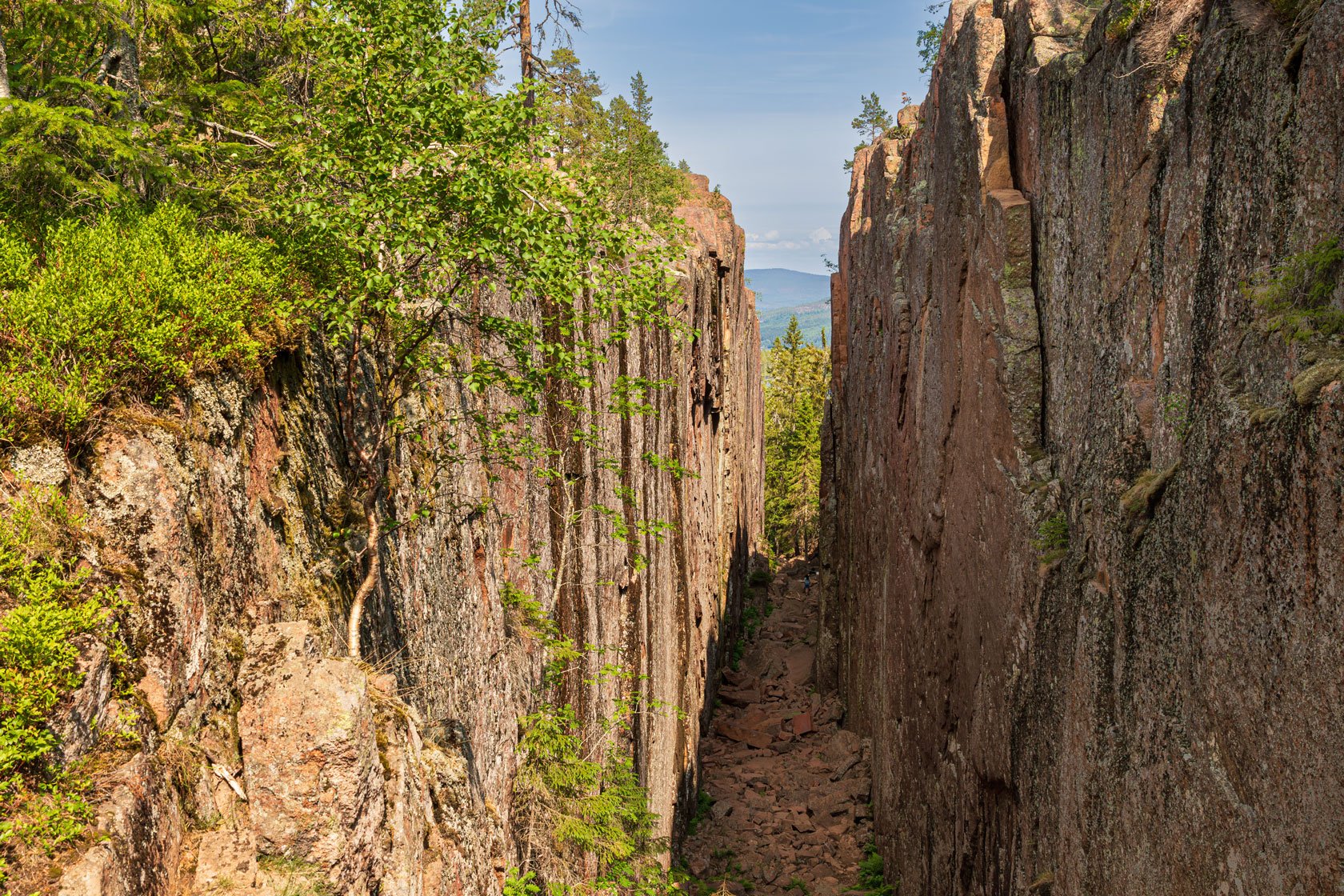
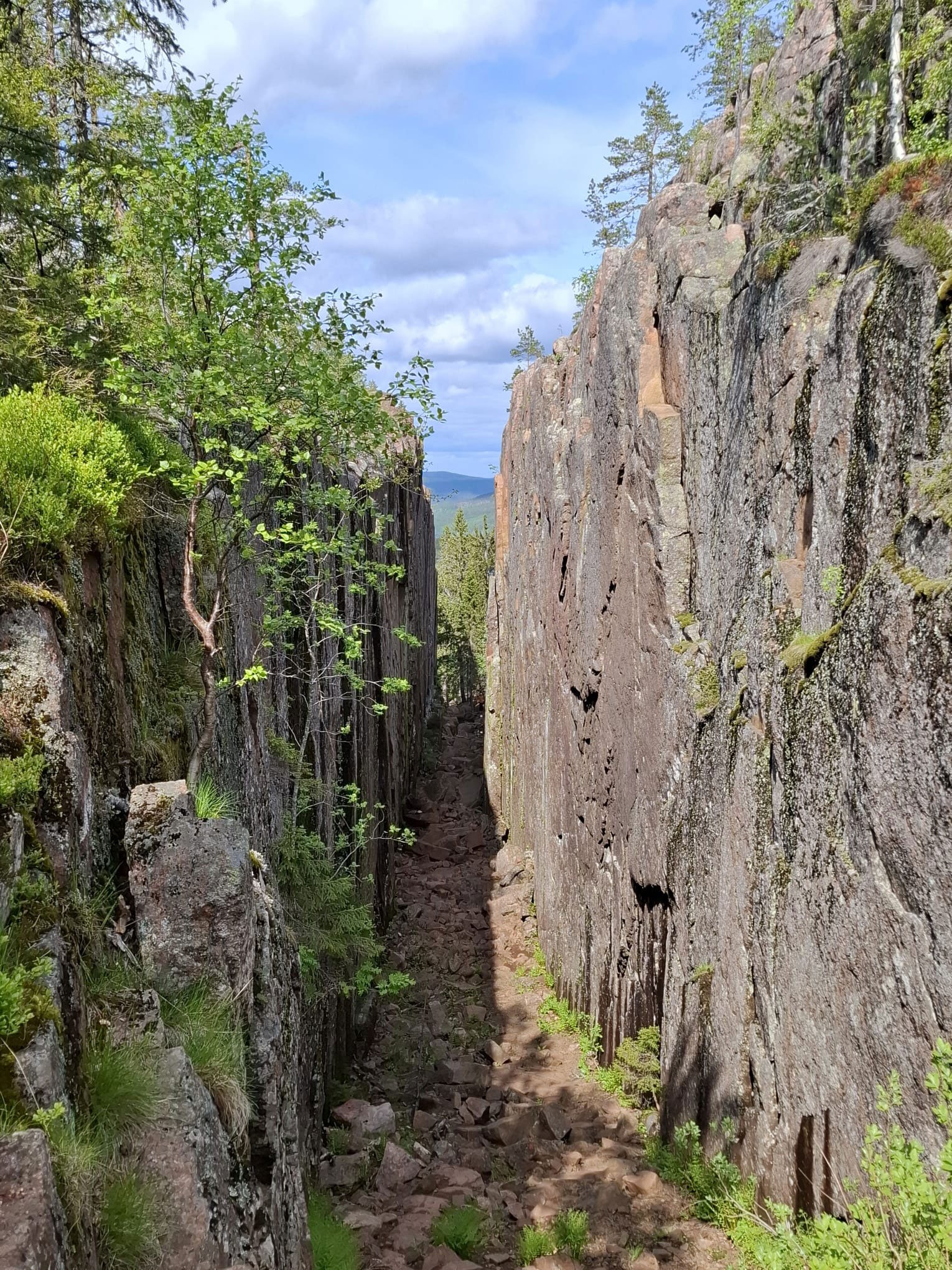
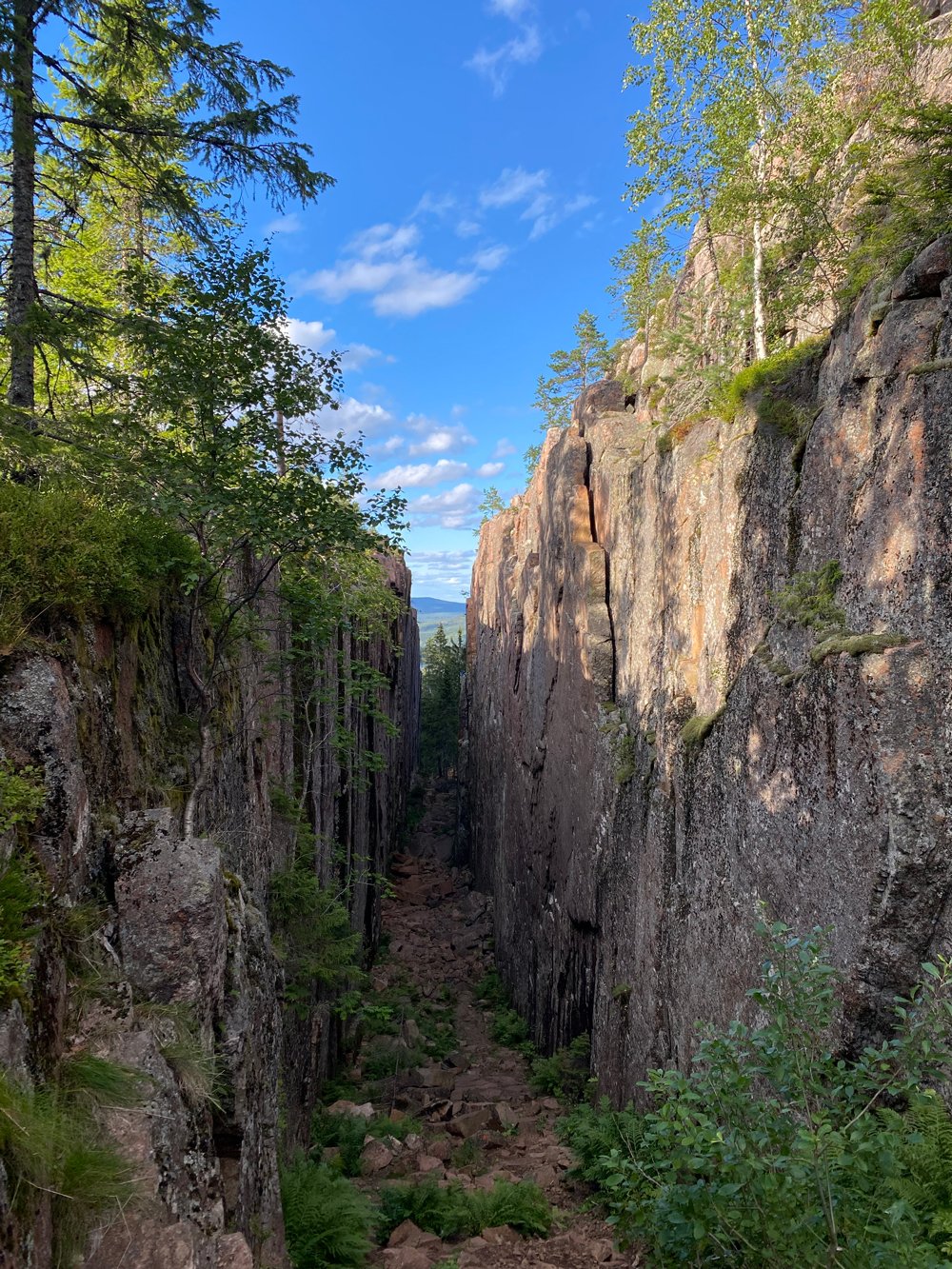
Since 2023, an unprecedented perspective has been opened towards the archipelago from the top of the mountain Slåttdalsberget. Its top, a basically flat “terrace” of red granite rock, where the vegetation is very scarce, can now be traveled along the path from both sides of the mountain that is split in half by the Slåttdalsskrevan, a 200-meter-long and 30-meter-high fissure.


Getsvedjeberget

Overlooking the Norrfjärden

The one that leads to the top of Getsvedjeberget mountain is a short excursion marked by satisfaction, although a bit challenging.

The segment that leads up begins steep and continues to be, but the effort is abundantly rewarded by the beauty it offers on the landscape of the fjord and the surrounding mountains. If you go there on a sunny, windy day, your jaw will drop in astonishment.

From Docksta, you can go there walking or biking (~3km); there is a pleasant road that leads to the Norrfjärden, avoiding crossing the highway. The path starts right inside the campsite.


Vårdkallberget

360 degrees views over the wild + the joy to walk the 2.5Km single track segment to the peak

Hiking in the stunning scenery of the High Coast can be experienced firsthand on this delightful and simple trail.

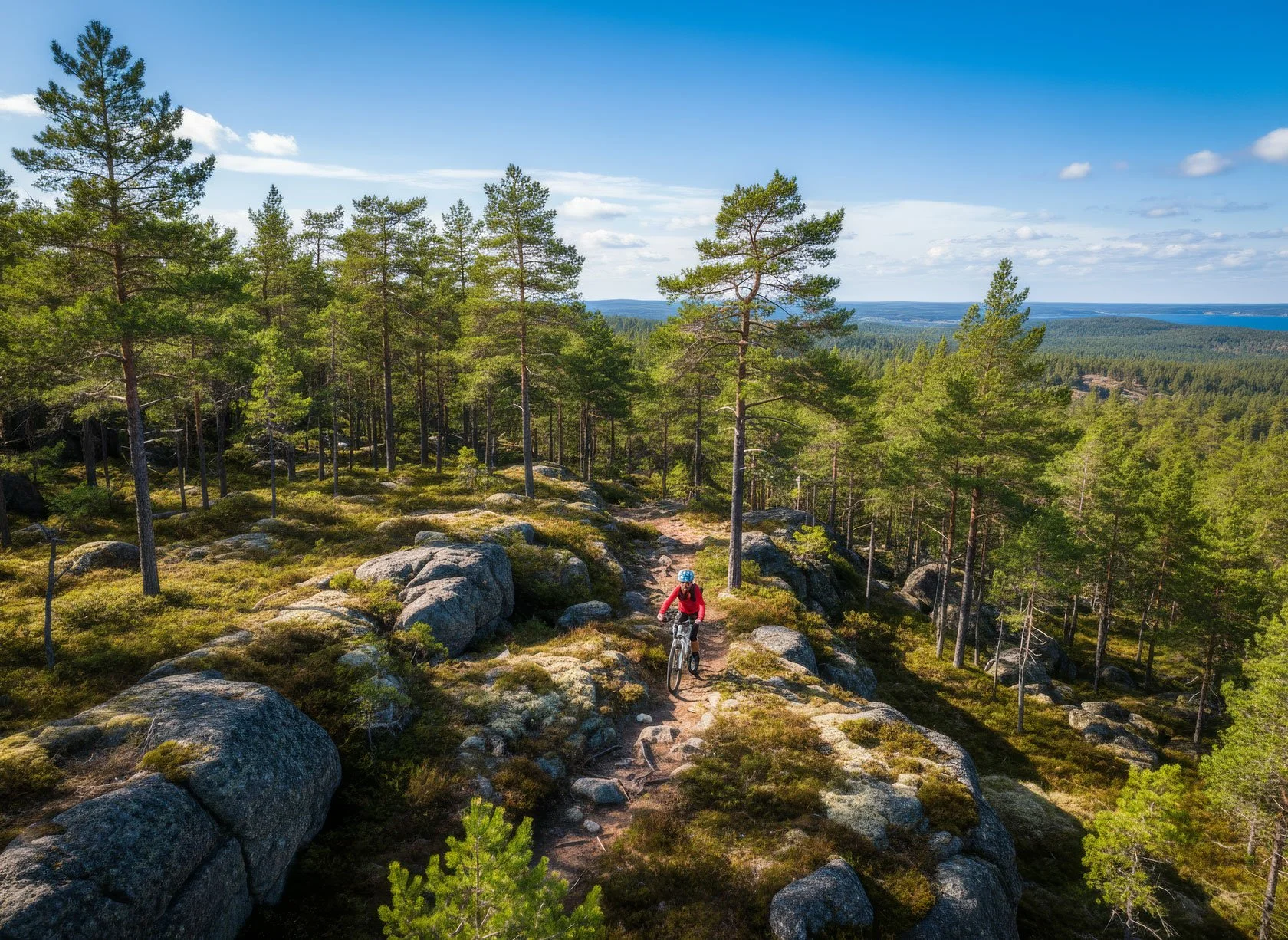
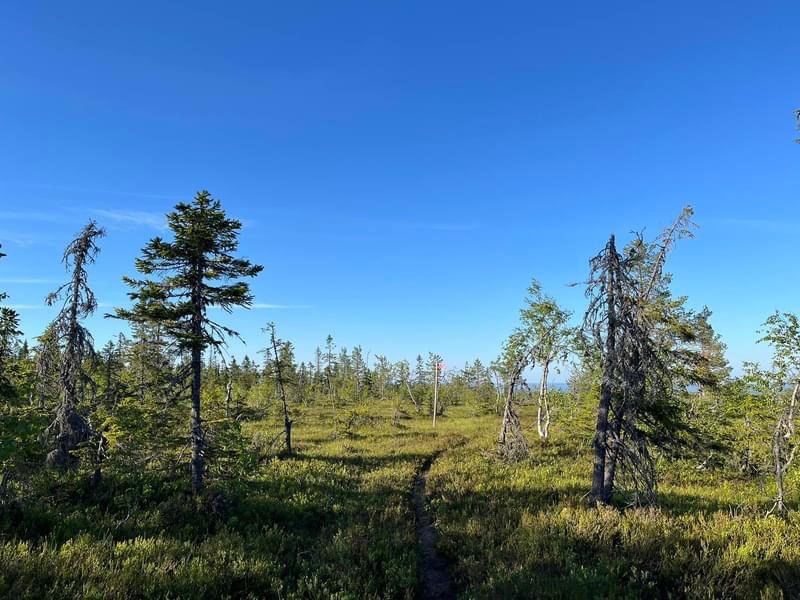
No component is left out. The path, almost a single track between blueberry bushes, slides quietly along the back of the mountain, crossing a beautiful rocky pine forest, where light easily penetrates. The contact with the sky is constant.

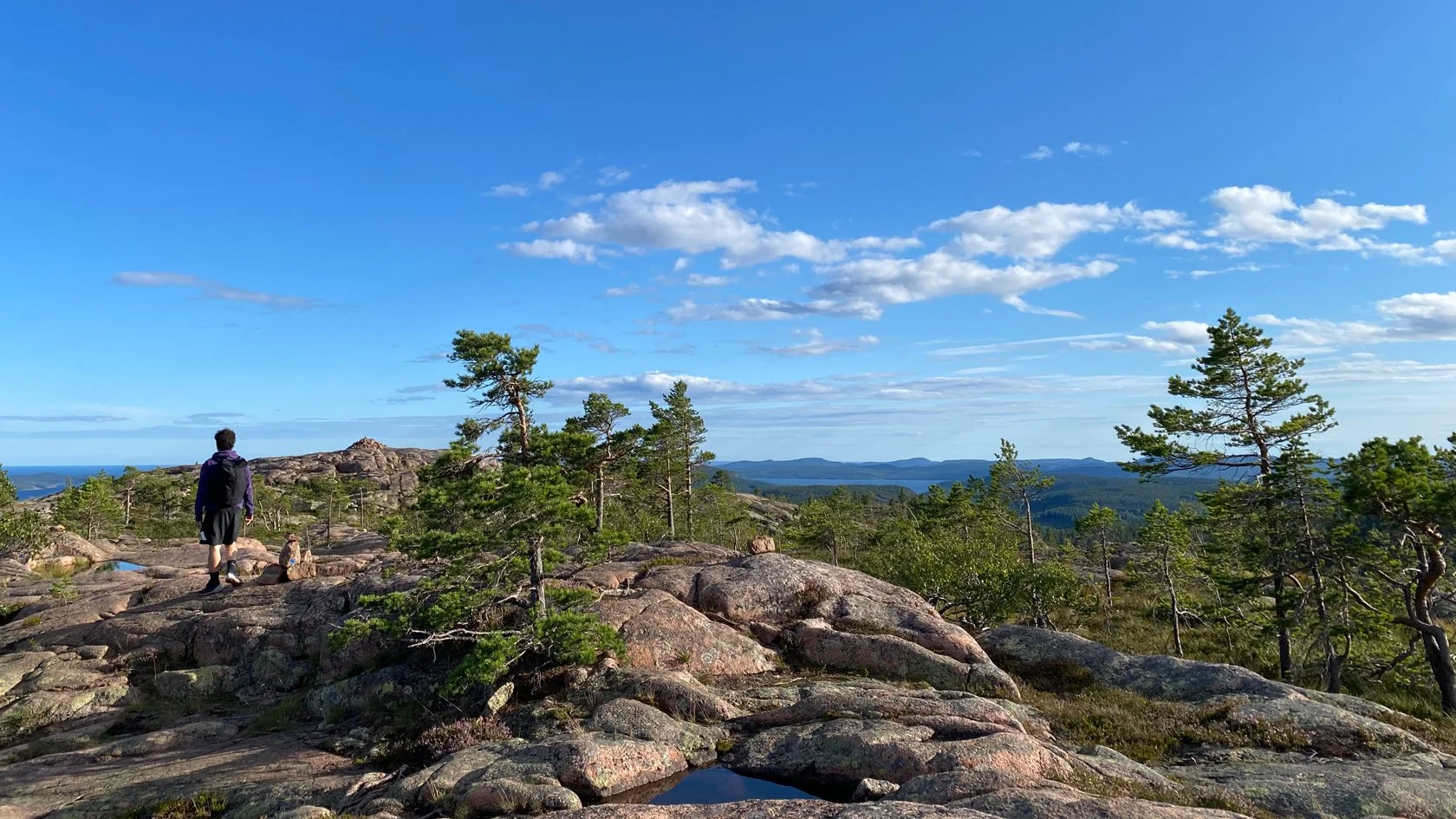
From the antenna, in Myre, you reach the summit at 265m a.s.l. in less than 3 kilometers, crossing wet areas, stretched on rocks covered with lichens and surrounded by very ancient pines, contoured by the wind. The path runs through a hidden and almost "secret" lake and crosses in a couple of points some of the typical cobble fields with round stones formed by the waves and sea ice around 10.000 years ago.

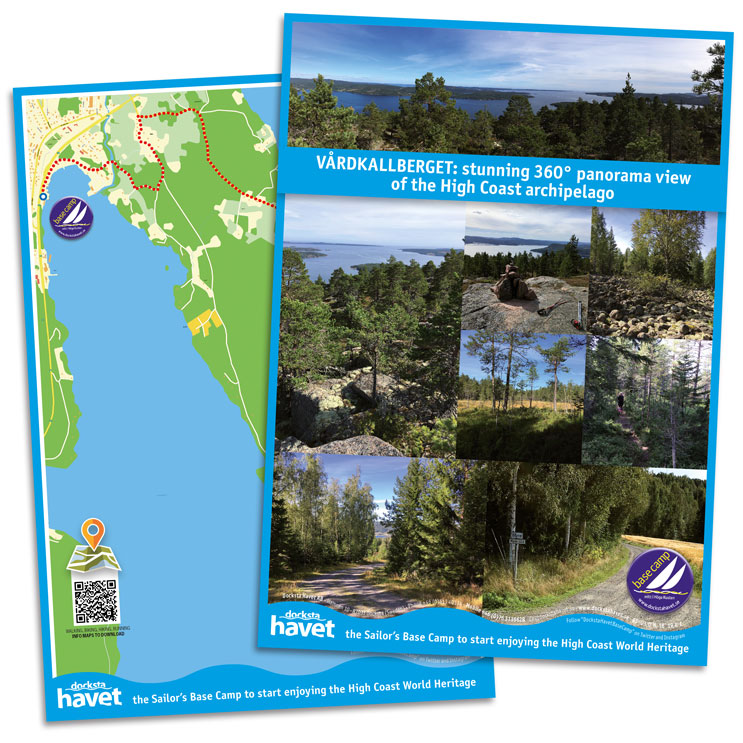
From the village, you can walk or bike to Myre to the “Antenna”, and start there your trail to Vårdkallberget: here you can download a free info-map about >


Herrestaberget

A special and privileged observation spot

This mountain protects Docksta and the northern part of the fjord from strong western winds coming from Norway.

From the main street of the village, you can hardly see but the Herrestaberget Mountain is there, at less than 1km; it rises in all its natural beauty, enclosing the precious treasure of a small natural area that preserves a portion of its oldest forest heritage from woodcuts.

The trail begins along the southwestern shore of Lake Gällstasjön; in this case, the track does not lead to the summit of the mountain but reaches a beautiful promontory overlooking the southeast. An observation point over Docksta, its fjords, and mountain reliefs will easily stay in your heart.

From the road that coasts the lake, you get there by a steep path in the woods, a little more than 500 meters and an oscillating divide of 129 meters.

From this panoramic point, the trail descends back and forth by taking a wide anti-clock tour around the mountain, leading to Sätra, with the wonderful old 1400 church of the village and the charming fields overlooking the south towards the fjord.


Fäberget

At the top of the mountain carved by ice and the sea

From its summit, there is an observation point with an incredible perspective. The mountain sits on the water at the intersection between Dockstafjärden and Ullångerfjärden. It is a cult deviation for all hikers walking along Stage No. 5 of the Höga Kusten Leden.

From the old church in Docksta, the trail crosses the Sätra meadows and enters, after a few hundred meters, into the forest. It is a really suitable walk for everyone, along a beautiful segment of the Höga Kusten Leden. At Skoved, you can safely cross the highway and walk the road toward the mountain and its shelter, facing east over the sea. Make time to explore the few small tracks around the summit toward the north, too. The peak has large, flat rocks covered by lychens and small trees.


During your walk to Fäberget, the short deviation to the shelter of “Per Olsbo” is unmissable.

This spot is a magical place, with a spectacular peak view of the fjord and Vårdkallberget, towards Docksta and the Skuleberget mountain.

Along the Höga Kusten Leden, it is marked with the "Utsight" sign approximately a few kilometers south of the church. Remember to sign the guestbook :)


Some tips to prepare your excursions

  • Move with a light backpack, always carry a reservoir of water with you and something to eat to replenish your energies.

  • With few exceptions, all the paths that lead you to climb or descend on the reliefs are very technical, you will also walk on rocks, roots and pebbles, you need suitable shoes. You do not need heavy or rigid shoes, good shoes are enough, for example for hiking or trail running, that are comfortable, with a good grip and possibly tasselled.

  • The paths that I have described are average well marked, you will generally find signs with the indications that are needed or more easily than signs made with colored paint on rocks and trees.

  • Bring a cell phone with the batteries charged but remember that you will not always have the coverage guaranteed, especially if you are in roaming with a non-Swedish telephone contract.


Tommaso De Rosa

See my host profile and contact me on Airbnb

If you would like assistance planning your stay in one of our waterfront accommodations at the marina, need hiking advice at Skyleskogen Park or Mount Skuleberget, or have any other questions regarding things to do on the High Coast during the summer, please contact me via the Airbnb chat. You are welcome :)

_Tommaso

Please write me by email or WhatsApp at +46.763136909


3 days in Docksta: discovering its classic day tours (without a car or a boat)

Exploring-Hoga-Kusten-High-Coast-Docksta.jpeg

If you are lucky to spend your holiday in the High Coast, the Skuleskogen national park, the Ulvön island, and the Skuleberget mountain have to keep a priority place into your summer’s bucket list.

In Docksta, you find the perfect “base camp” to start visit them.


You can even leave your personal means of transport at rest - your own car or boat is not essential to discover the surroundings of Docksta.

Here you have some transportation alternatives:

  • by free bus service, you can reach the nearest entrances of the park;

  • by ferry from Docksta, you can reach the typical fishing village of Ulvön;

  • by walking you can conquer the summit of the Skuleberget just following its beautiful paths or taking the chairlift (if you are not confident with hiking uphill).


DAY 1#

Hiking the Skuleskogen best trails

hoga-kusten-national-park-skuleskogen-hiking-trailrunning-overview-archipelago.jpg

The National Park is the target of a full day spent hiking and enjoying the beauty of the Höga Kusten world heritage outdoors.

The bus starts from Kustlådan campsite 2km south of the village and stops at Docksta Marina on the E4 (just 50 meters from our piers), then it picks up people at the campsites on the southwest side of the Skuleberget and at the museum & Tourist High Coast Center on the east side, and has a last stop to the campsite at Veåsand before to leave you at the southern entrance of the park. From there, you enter some of the best trails and the most popular spots.

This bus service operates during the summer: here you find more info about how to easily reach the park from Docksta with the summer bus >

One spot recommended:

Start visiting the beaches at the Kälaviken bay and walk the suggestive path in the forest alongside the coastline and step on its beautiful spots seaside. In the morning particularly, it’s an amazing walk with the rays of the low sun entering in the wood from the sea.


DAY 2#

Cruising to the charming Ulvön

view-village-of-ULVON-island-high-coast-hoga-kusten-top-spot-from-docksta.jpg

It is the ideal trip to discover the beauty of the archipelago and the magic of a renowned fishing village: for its traditional houses and docks and for the delicacy of its fermented fish, the surströmming.

During the summer, the ferry M/S Kusttrafik starts from the harbor in Docksta every morning at 10am. The cruise along the Docksta and Ullångersfjärden covers the nautical miles to Ulvön in one hour while people enjoy the view of the natural coastline from the deck.

High-Coast-Hoga-Kusten-Ulvohamn-morning-view-from-the-sea.jpg
 
overview-village-of-ULVON-island-from-lotsberget-high-coast-hoga-kusten-top-spot-from-docksta.jpg

One spot recommended:

Don't miss the short walk to the step up at the Lotsberget hill to the high viewpoint over the village and the harbor or an incursion on the coastline close to the bay of Flågstängsberget that faces toward the open sea to east.


DAY 3#

Up-up-up to the Skuleberget

view-from-the-summit-of-skuleberget-mountain-in-docksta-hoga-kusten.jpg

Walking its trails or taking the chairlift to reach the summit, from the top of the mountain the views over the surroundings are always astonishing.

If you're based in Docksta, the slopes of the mountain are one step away from your front door (and from the piers of the Marina, too). But you can also have an enjoyable ride, lock your bike and start hiking, taking the chairlift, or visiting the museum about the High Coast World Heritage, or… climbing up a route of the Via Ferrata!

ONE SPOT RECOMMENDED:

The Naturum Höga Kusten Museum lies at the foot of the Skuleberget mountain about 3 km walking or biking north of the village: if you want to know more about the highest uplift of the land in the world, and geology & landscapes of the High Coast, start there!


Staying in Docksta even few days during your holiday, you will notice that there is no shortage of things to discover and do around here outdoor.

If using your car isn't in your plan or you decided to safely dock your boat, start from here to discover the coastline and inland beauty of the High Coast, where the heart of the world heritage beats even stronger.


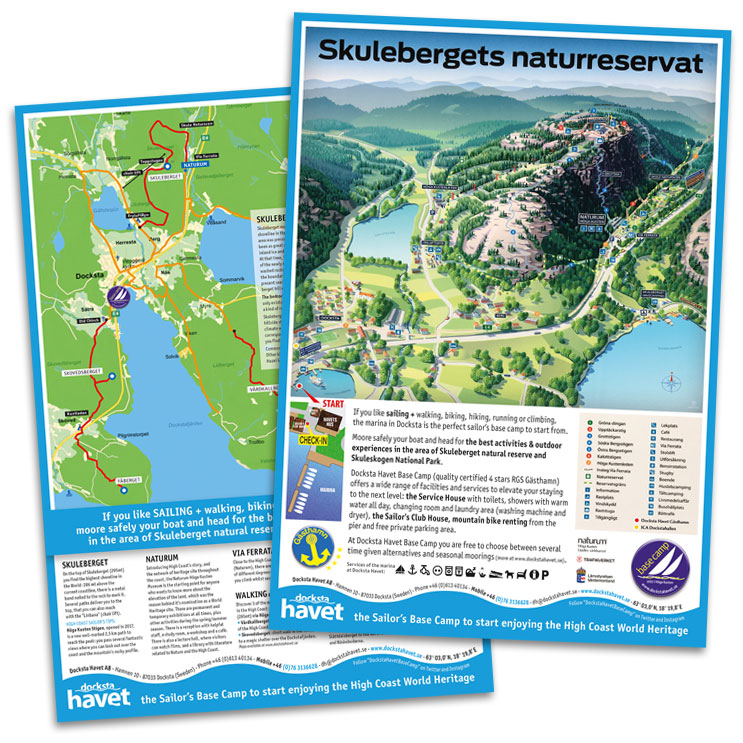
FREE HIGH COAST INFO MAPS:

HANG YOUR #HÖGAKUSTEN PASSION ON A WALL:


We suggest you these readings:

Skuleskogen National Park without a car: Docksta as a simple starting point

Skuleskogen National Park: overview of the High Coast archipelago from Slåttdalsberget hill.

Skuleskogen National Park

Updated: December 2025 — now includes a more reliable car‑free planning approach and official maps.

This article was originally written with seasonal bus info in mind. It’s now updated to help you plan a smooth Skuleskogen day even when public transport isn’t running.


For years, reaching Skuleskogen National Park without a car was easier thanks to seasonal public transport. In recent years, this service hasn’t been running every season, so it helps to plan a car‑free day with flexible options.

Instead, think of it as a better kind of day: a ride + hike adventure.

Starting from Docksta (Docksta Havet Base Camp), you can turn the commute into part of the experience. The ride to Skuleskogen is around 10 km, on a mix of paved road and gravel. You follow the coastline of Norrfjärden, then continue on a newer road that crosses the forest towards the park’s South Entrance. It’s generally easy, with a few gentle ups and downs.

It’s not “zero effort” — but it’s a beautiful way to arrive: you warm up, you slow down, and you enter the park already in the right rhythm.

Docksta is a practical starting point for Skuleskogen — especially for Airbnb guests, sailors on shore leave, and travellers who prefer a simpler, flexible plan.

Below you’ll find official resources (maps + visitor info), a few highlights, and a straightforward car‑free mindset approach to planning your day.

Quick plan (no car, no stress)

  • Start: Docksta Havet Base Camp (Docksta marina)

  • Goal: Skuleskogen National Park (day hike)

  • Mindset: ride + hike (the commute becomes part of the experience)

  • Traveling light? You can rent a bike, a daypack, and a hammock kit (hosted at the marina, no deposit, flexible return)

  • WhatsApp us: we’ll confirm availability + suggest the simplest route for today.

The southerly entrance of Skuleskogen is the nearest to the Slåttdals crevice (Slåttdalskrevan).

Public transport note (check each season)

The World Heritage Bus (Världsarvsbussen) ran with a summer timetable in 2023. Always double-check current info before planning.

Source: www.hogakusten.com/en/world-heritage-bus

 
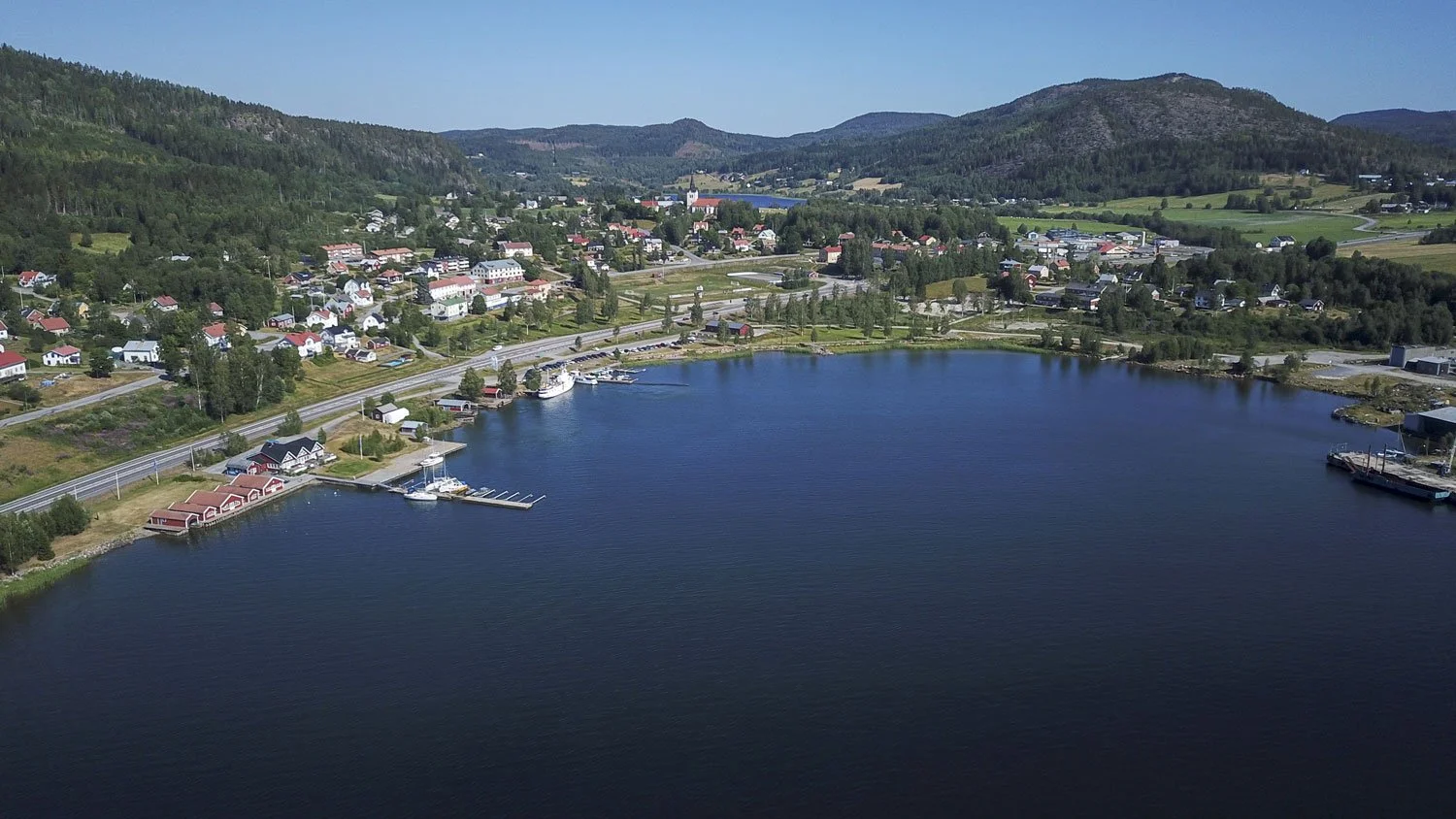
Overview of Docksta Havet guest harbour. Photo © Courtesy of Mia Wålsten S/Y Atla3

Picture above: Docksta Havet Base Camp

The Docksta starting point (why it works)

Docksta is a natural base for exploring the High Coast because you can combine:

  • Seaside stays (Airbnb) and a safe guest harbour / marina (leave your boat while you explore on land)

  • Local, real-time advice (weather, daylight, trail conditions)

  • A flexible day plan that doesn’t depend on a single timetable

If you’re staying with us (or passing by), just ask — we’ll suggest the simplest way to plan your Skuleskogen day based on your pace and the conditions.

From Docksta, the most straightforward access point is Entré Syd (South Entrance) — a simple starting point for a ride + hike day.

At Docksta Havet Base Camp we also run Outdoor Ready / Grab&Go — simple bikes + essential gear for a smooth day in nature without overplanning.

Grab&Go (Outdoor Ready): bikes, daypacks, hammock kits — pricing & how it works →


Official Skuleskogen resources (recommended)

If you want reliable, up-to-date information, these are the best starting points:

  1. Official park overview (Sveriges Nationalparker)

  2. Visitor information (rules, seasonality, practical notes)

  3. Skuleskogen - Official PDF folder (English) (Länsstyrelsen)

If you want a simple hiking-oriented overview (what it feels like, how to pace your day, and what to expect), read about my recommended trek at Skuleskogen.

Free Info Maps about the High Coast
 
Hiking the natural paths into the Skuleskogen forest

Why Skuleskogen is worth a full day

Skuleskogen is one of the few remaining large, ancient forests of the coastal region. Red Nordingrå granite cliffs, the uplifted coastline, and dense coniferous forest — with rare species of lichens — shape the park’s character.

Main attractions include:

  • Spectacular views over the national park’s dramatic landscape and the surrounding High Coast

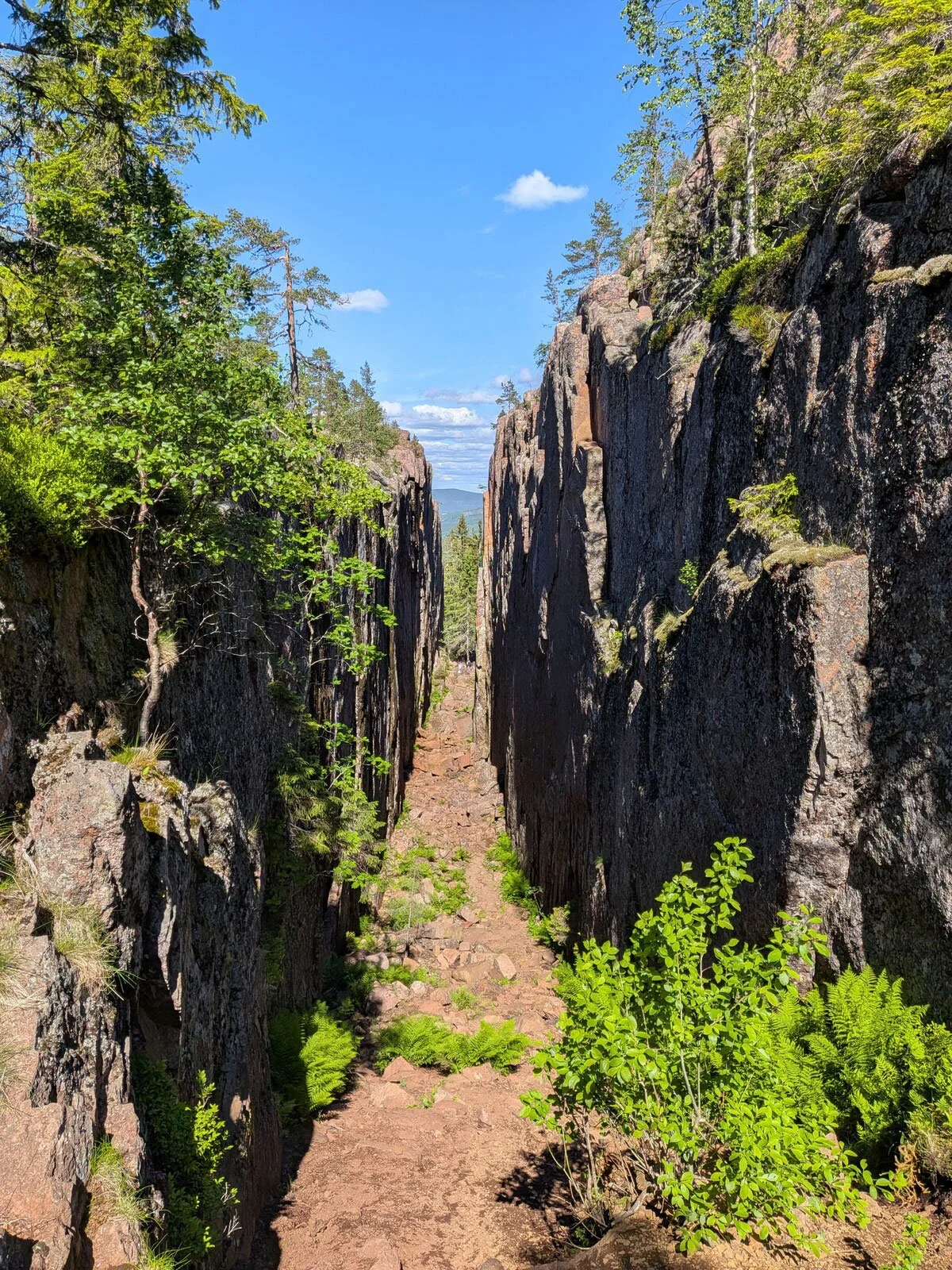
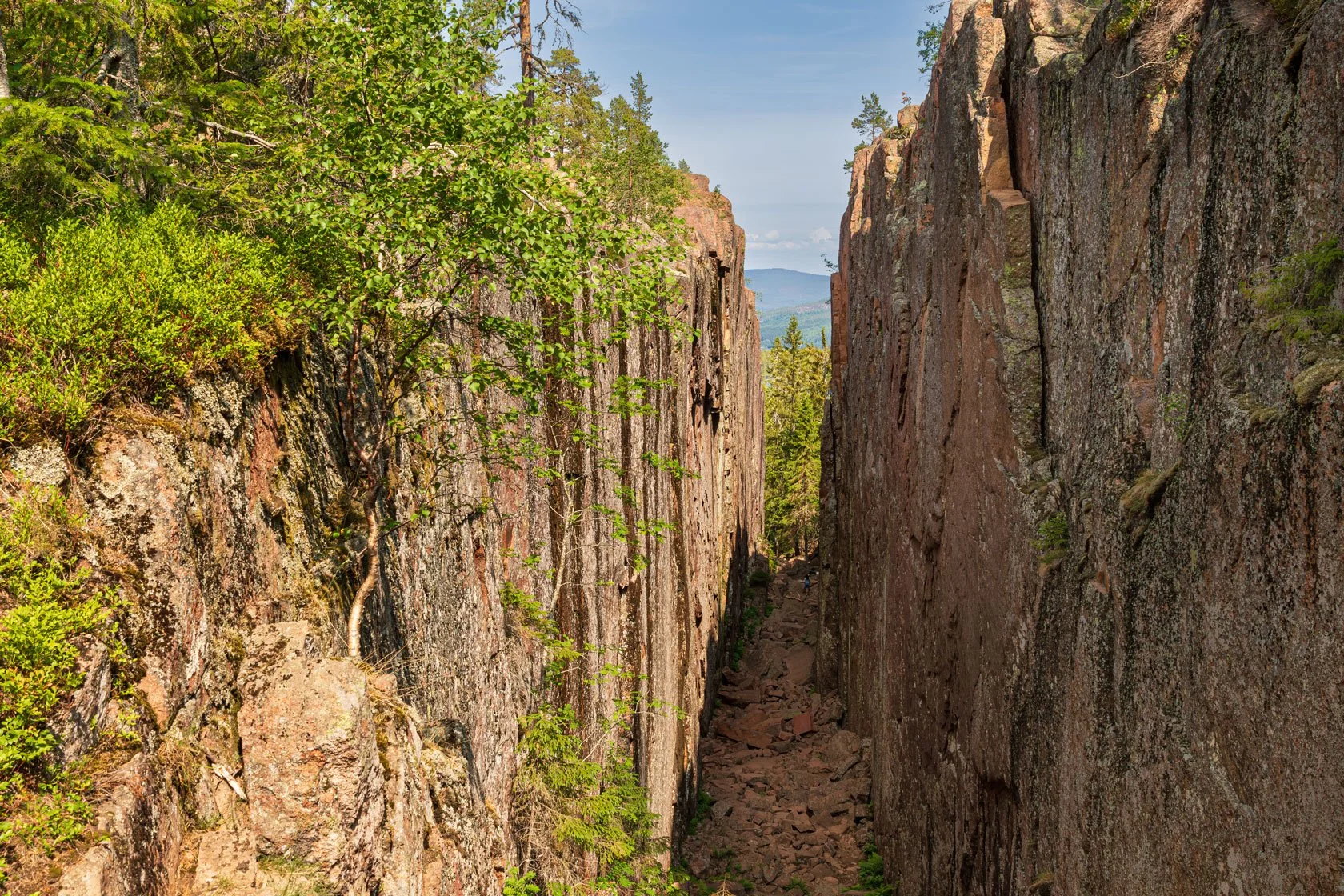
  • The 7-metre-wide, 30-metre-deep “Hell Gap” crevice (Slåttdalskrevan), which cleaves Slåttdal mountain in two

  • Hiking the natural paths deep into the Skuleskogen forest


A simple car-free mindset (practical, not technical)

  • Plan your visit as a full-day outing (so you’re not rushed by logistics)

  • Keep your plan flexible (weather and daylight matter)

  • Bring the essentials: good shoes, water, a wind/rain layer, and lunch

  • If you want the easiest version, start from Docksta and ask for the best “today plan” (we share the most suitable starting point and route idea based on conditions)

If you want to visit Skuleskogen without a car, we can help you keep it simple:

  • Bike Rental (Grab&Go) — best for a ride + hike day plan

  • Perfect Forest Day Kit — bike + daypack + hammock kit (for an easy “full day” setup)
    → Grab&Go Pricing & Booking


Make it easy (Outdoor Ready / Grab&Go)

Many travellers arrive without a car — and often without the right gear for a full day outside.

With Outdoor Ready / Grab&Go, you can keep it simple: bike access, a daypack, and the small essentials that make the day smoother.

Ask us at Docksta Havet Base Camp and we’ll match the setup to your pace, weather, and daylight.


What to bring (quick checklist)

  • Good shoes (grip matters)

  • Water + lunch

  • Wind/rain layer (the coast changes fast)

  • A small daypack helps

  • Traveling light? Ask us about Grab&Go (bike / daypack / hammock kit)


One last host note

Skuleskogen is best when you’re not rushing. Plan a full day, keep your route flexible, and let the park set the pace.

Need help planning today? Ask us at Docksta Havet Base Camp — we’ll suggest the easiest car‑free plan and the right Grab&Go setup.

Looking for more local day trips? Explore our Guides & Stories >


Hang your #HÖGAKUSTEN passion on a wall:

SAFE-MOORINGS-SKULEBERGET-SKULESKOGEN-docksta.jpg

Sailing to Skuleskogen: the National Park between land and sea

One of the best green breaks, in your cruise discovering the High Coast, is a visit to the National Park of Skuleskogen.

The National Park designation is the best a nature area can receive, as well as unique locations of outstanding natural beauty which ensure that nature can be fully experienced.

Skuleskogen is close to Docksta Havet Base Camp so - by bus, or walking/biking from the piers - it's a fantastic destination after your days of serious sailing around the coast!
 

Explore the Skuleskogen National Park sailing the High Coast in Sweden

Suggestions for cruising in the High Coast:
Sailing to Skuleskogen National Park to enjoy its stunning natural beauty

Sights:

  • The views over undulating forest and the sea.

  • Slåttdalsskreven.

  • The Kalottbergen mountains and their forested peaks and bare slopes.

  • The flora.

  • The Bronze Age barrows.

Area: 2,360 hectares. 
Established: 1984, extended 1989. 
 

Location: Approximately 40 kilometres south of Örnsköldsvik in Örnsköldsvik and Kramfors municipalities, Västernorrland County.

Visiting Skuleskogen: Signs on European Highway E4 show the way to the national park. There is an access road from the south via Käl, and from the north via Näske. The High Coast Visitor's Center (Naturum Höga Kusten) provides an introduction to the park´s human and natural history. There are 30 kilometres of hiking trails, as well as three sleeping cabins and two shelters that are open year around.

Skuleskogen National Park is a wild and majestic section of Ångermanland’s “High Coast”, where the rolling hills of the Norrland forest meet the northern Baltic Sea. This roadless wilderness offers the visitor magnificent views over sea and forest, beautiful lakes, verdant spruce-clad valleys, and fascinating geological formations which, more clearly than anywhere else, demonstrate how much of modern Sweden has risen from the ancient sea.

This national park is a heavily undulating rift valley adjoining the coast, featuring forest and outcrops of flat bedrock, in untouched condition where vegetation and animals have been able to develop freely. This area will offer the visitor the opportunity of enjoying fabulous experiences of unspoilt nature. Features especially worth seeing are Slåttdalsskreven, a gorge, 200m long, 40m deep and 7 metres wide, the bronze age cairn, extensive shingle fields, interesting vegetation and, not least, magnificent views of the archipelago. There is a total of thirty kms of marked trails which offer the hiker several alternative circular routes. The High Coast trail crosses the national park. Overnight cabins are located at Skrattaborrtjärn, Lillruten, Tärnättvattnet and Näskebodarna. (Font: www.y.lst.se)


HIGH COAST SAILOR'S TIPS:

Sailing to the heart of the World Heritage: experience Skuleberget and Skuleskogen National Park >


Skuleskogen National Park (1984) and Nordingrå Nature Conservation Area (1983) are classified Category V - Protected Landscape/Seascape: protected area managed mainly for landscape/seascape conservation and recreation - and defined as "Area of land, with coast and sea as appropriate, where the interaction of people and nature over time has produced an area of distinct character with significant aesthetic, ecological and/or cultural value, and often with high biological diversity. Safeguarding the integrity of this traditional interaction is vital to the protection, maintenance and evolution of such an area."

The purpose of Skuleskogen National Park is to preserve in unspoiled condition a coastal landscape of forest, rocky terrain, fissure valleys and steep rolling hills where plant and animal life may develop naturally. (Font: www.naturvardsverket.se)


Skuleskogen is a stupendous area. It combines high mountains, ancient forest and sea coast in a landscape which is without equal in Sweden. Pronounced peaks covered with windswept rocky pine forest are divided by deep rift valleys sculpted by the sea and the inland ice.

There are, in spite of the deserted appearance, traces of human habitation. The oldest of these are Bronze Age burial cairns. The inland ice was unusually heavy here, and pressed the mountains down under sea level. The country has been rising from the sea ever since, to reach today's level of almost 300 metres above sea level. There are also bare boulder fields, swamps and tarns in the park.

The fertile stream valleys are home to many species of bird, such as the very rare grey-headed woodpecker. Several Swedish plants have their most northerly limit in Skuleskogen, for example the decidious trees maple, lime and hazel. The trees are probably relics from warmer ages when deciduous forest was found this far north.

The foremost sights of Skuleskogen are the views of the rolling forest and the sea, Slåttdalsskrevan ravine, Kalottberget mountain with its forested top and treeless slopes, the flora and the Bronze Age burial cairns.

(Font: www.naturvardsverket.se and www.y.lst.se)

Your boat safely moored to start exploring Skuleskogen and Skuleberget

Höga Kusten: the world's highest uplift of land

The mark of the sea level 9.600 years ago, on the top of Skuleberget

Sweden was entirely covered by inland ice around 20,000 years ago. The High Coast was the area where the land surface was pressed down the most by the vast, three-kilometre wide glaciers.

View of a typical High Coastline. Here is Rotsidan.

From Riksantikvarieämbetet (The National Heritage Board), the agency of the Swedish government that is responsible for heritage and historic environment issues, here below is a complete description of the isostatic uplift that was the key reason for the designation of the High Coast as a UNESCO's World Heritage Site:

The High Coast has the highest uplift of land in the world after a period of inland ice.

Höga Kusten - a view of Rotsidan's shoreline

The land arose from the sea after the ice melted 9,600 years ago. Gradually, plants and animals inhabited it. Humans settled the area and made an impact as well. The serene and peculiar landscape features sweeping mountain lines, steep cliffs over the sea and creeks that meander between the islands.

Sweden was entirely covered by inland ice around 20,000 years ago. The High Coast was the area where the land surface was pressed down the most by the vast, three-kilometre wide glaciers. As the ice began to melt, the land began to rebound, and return to its original position. That is the basic explanation of the nearly 800-metres land rise after the peak of the latest Ice Age, called Weichel.

The area is a unique example of how geological forces have drastically altered a landscape in a relatively short period of time. Special phenomena are hemispheric hills with moraines and caps of woods marking the highest shoreline, 286 metres above present sea level. There are also offshore banks reaching up to 260-metres.

There is a varying plant- and animal life on the land and in the water. For example, there are different forest types, different types of coniferous clumps and rare deciduous trees such as hazel, lime and elm. On the cliffs toward the north, you can find exotic alpine species such as the tufted saxifrage, alpine clubmoss, alpine lady's mantle and the three-leafed rush as well as the unusual plant "strandtraven," which only exists on the High Coast.

The relatively quick land uplift has affected the conditions for human life along the shoreline. There are remains of human settlements and continual human activity during a period of 7,000 years, within a distance of 3 kilometres from the present-day shoreline. The shorelines of different eras contain remains of dwelling-places and human traps from the Stone Age, Bronze Age cairns and burial mounds from the Iron Age, as well as piers and house foundations from previous millennium.

High Coast - a view of the sea merging the countryside

The High Coast was inscribed on the World Heritage list in the year 2000. The motivation of the World Heritage Committee: "The site is one of the places in the world that is experiencing isostatic uplift as a result of deglaciation. Isostatic rebound is well-illustrated and the distinctiveness of the site is the extent of the total isostatic uplift which, at 294m, exceeds others. The site is the "type area" for research on isostacy, the phenomenon having been first recognised and studied there." (Font: Riksantikvarieämbetet - More info here)
Photo on the left: Västernorrlands Länsstyrelsen ©