A Tall Ship, a Long Memory — and a Science Mission Under Sail: STS General Zaruski at Docksta Havet Base Camp
Some boats arrive quietly.
Others arrive like a moving museum — ropes humming, masts drawing lines into the sky, and a name on the stern that feels like a chapter title.
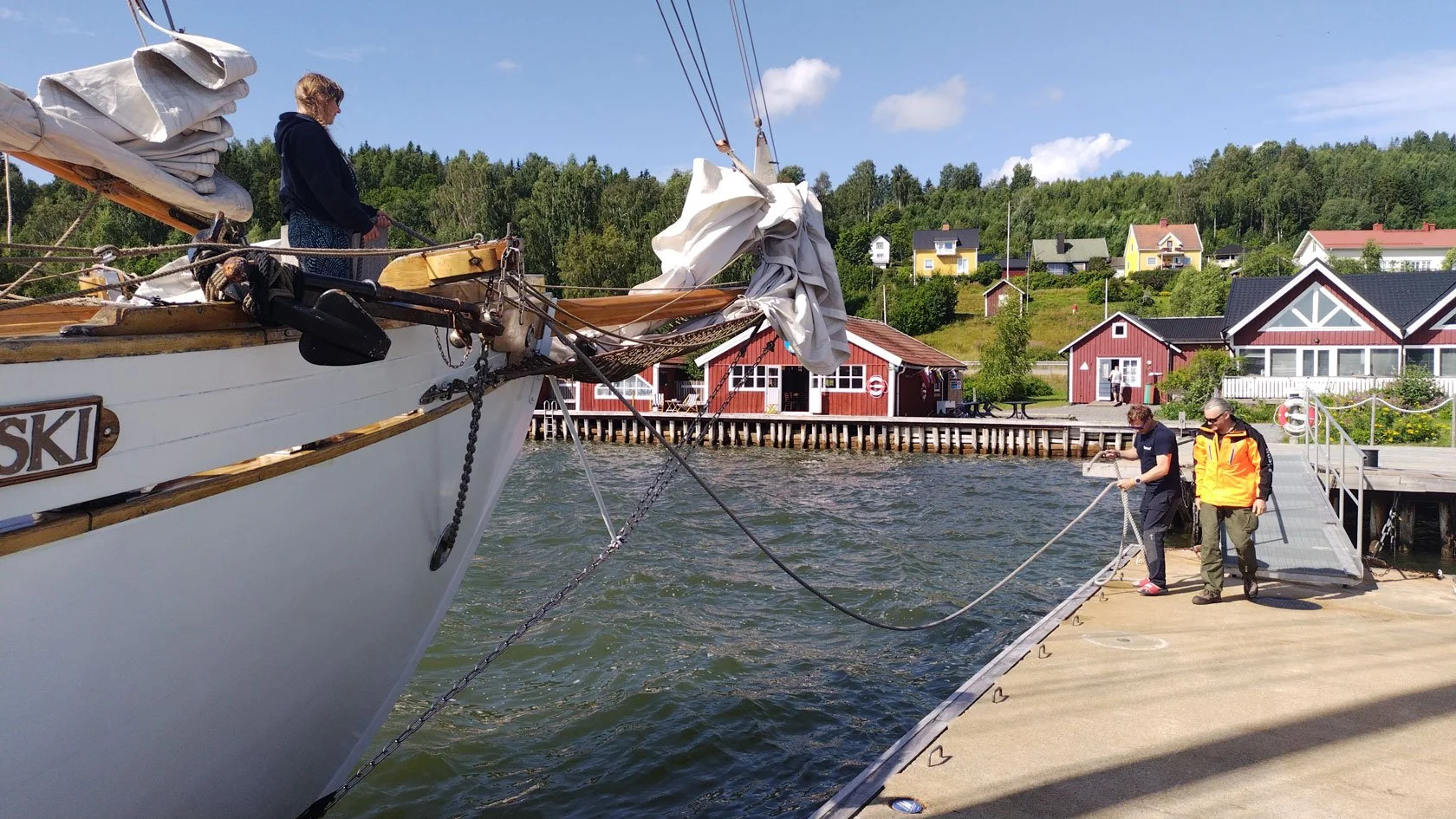
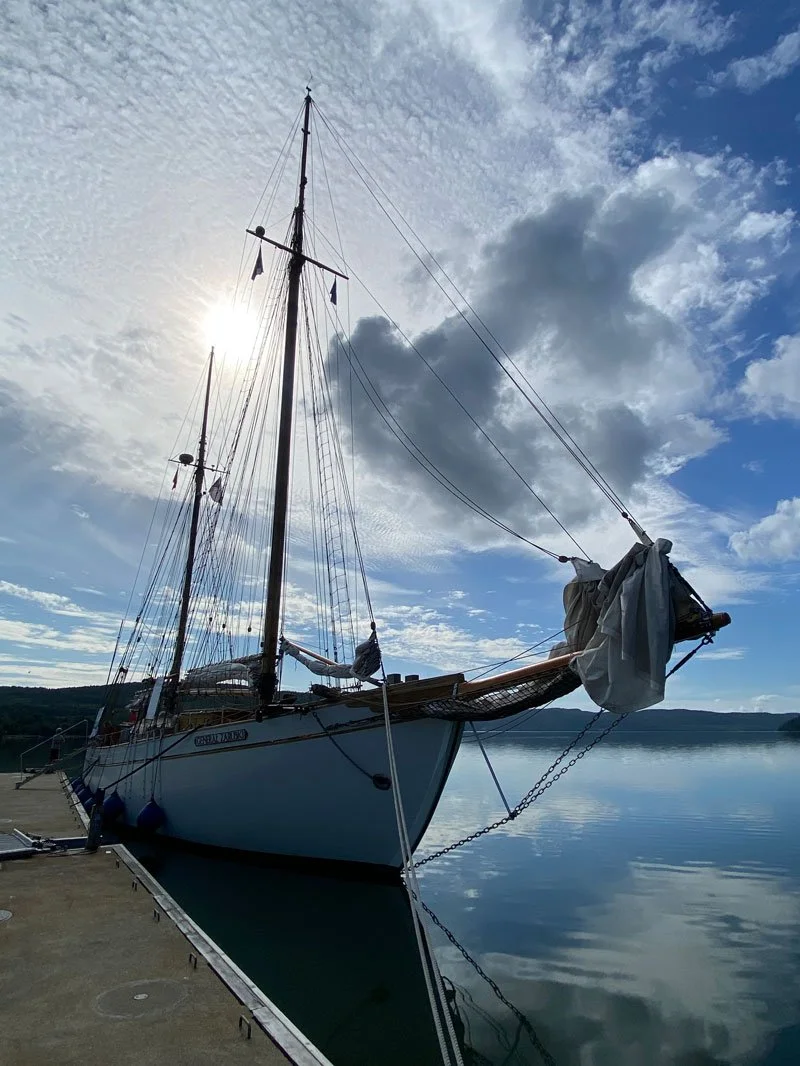
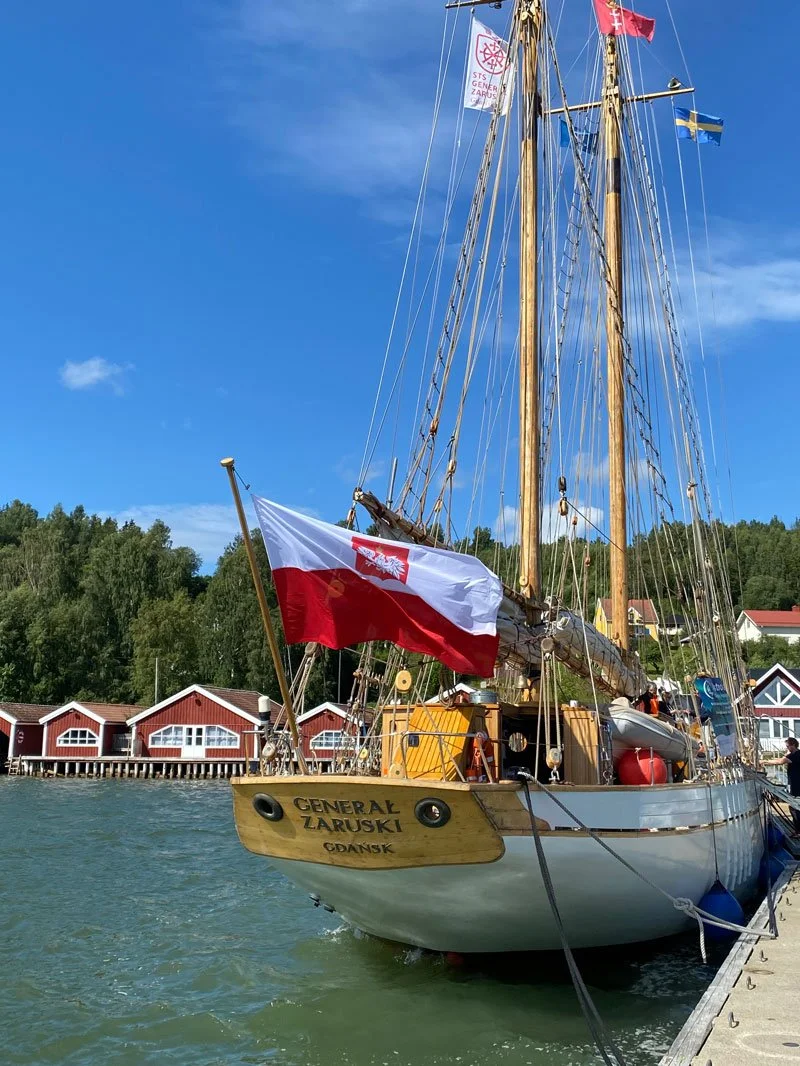
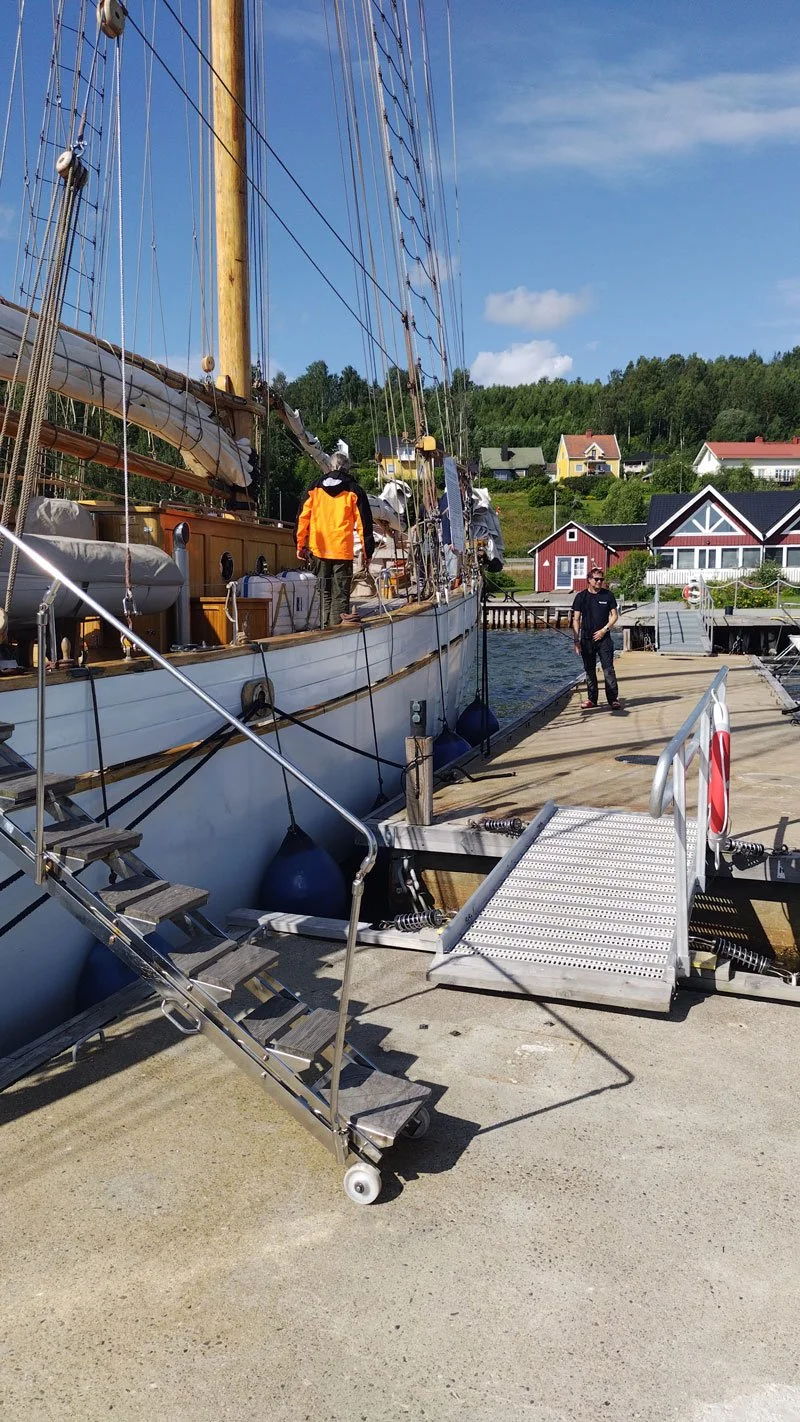
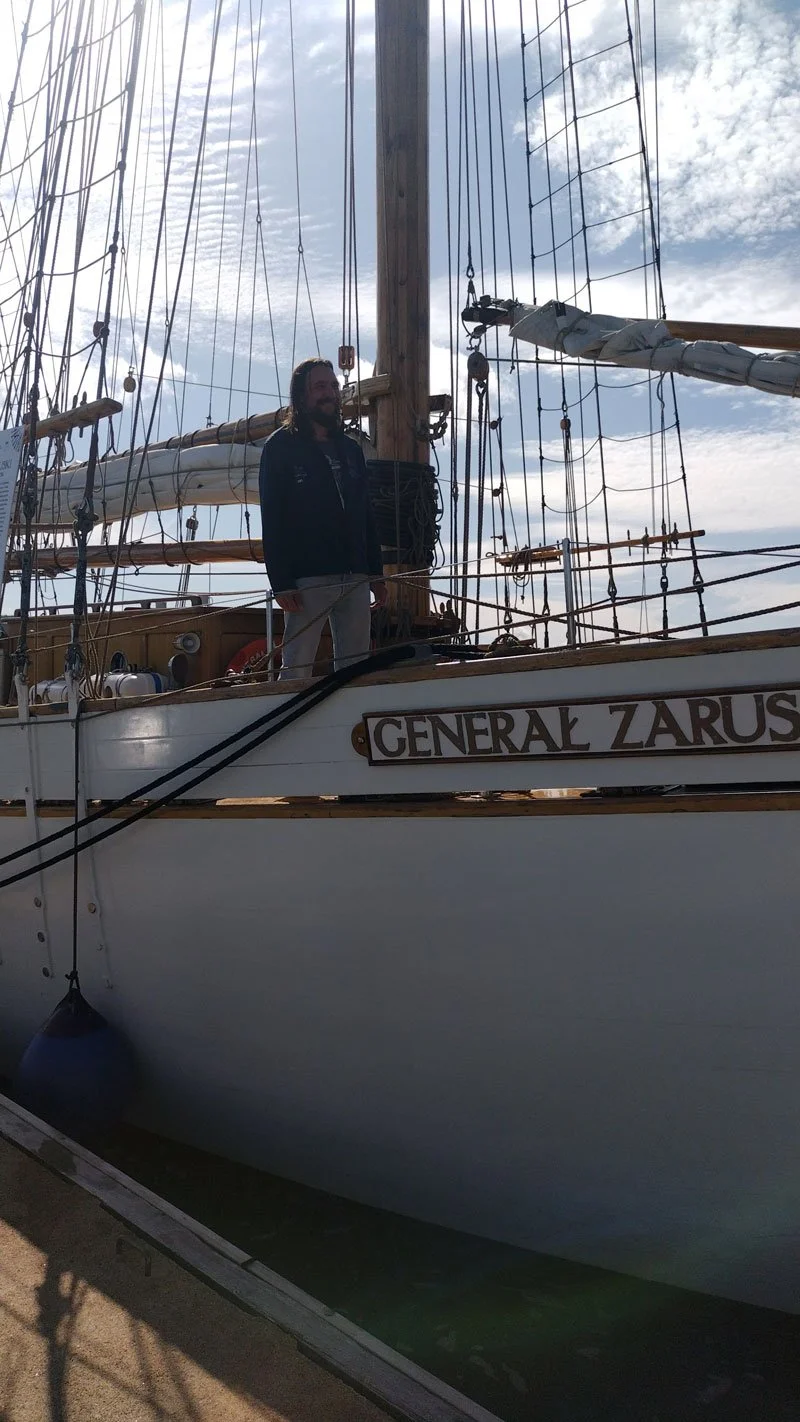
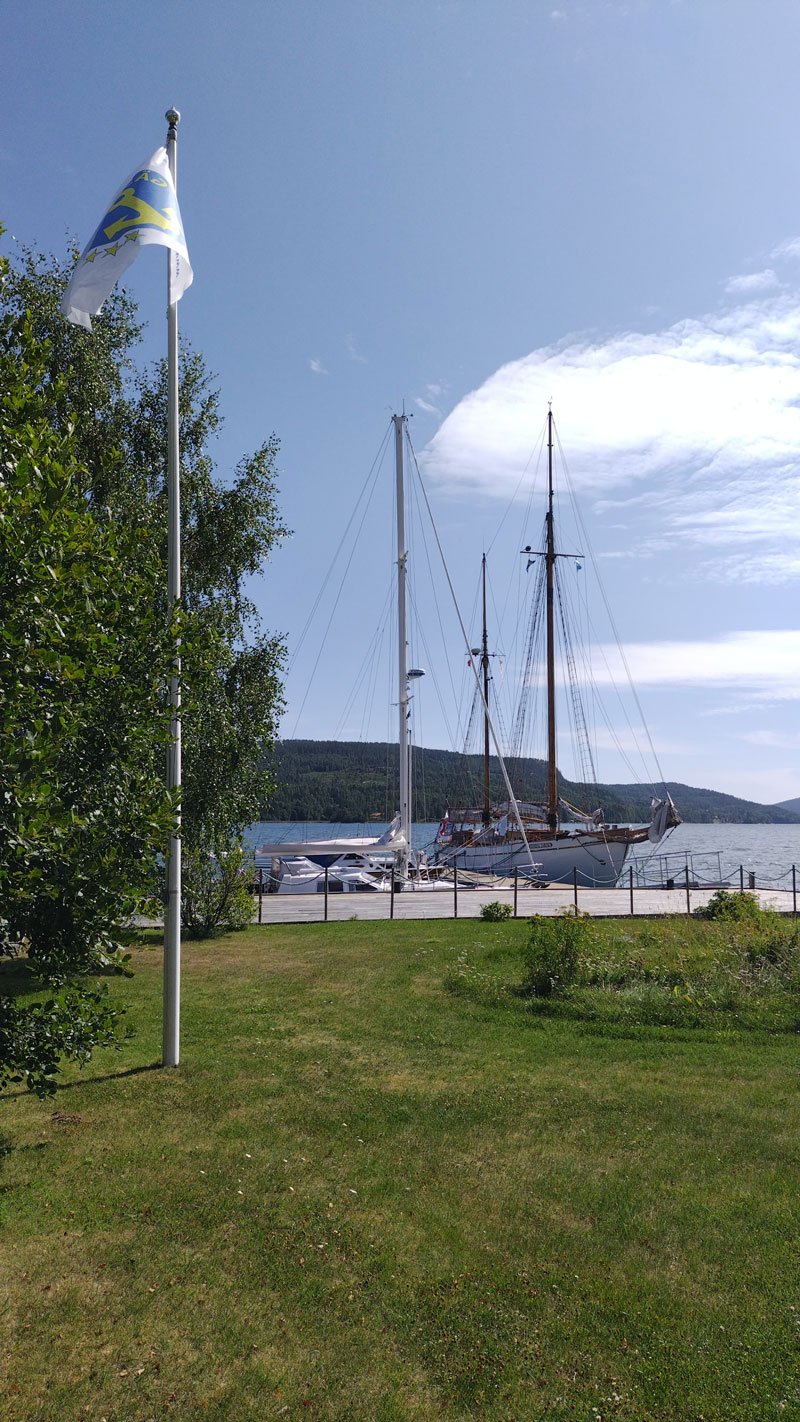
This week, a traditional tall ship is moored at our piers at Docksta Havet Base Camp: STS General Zaruski, home port Gdańsk.
At first glance, she’s simply beautiful: a wooden hull, classic lines, a deck built for real work. But then you start reading the boards on board — and you realize you’re standing next to a story that has crossed decades, countries, and purposes… and still keeps sailing forward.
Built in 1939 — and still teaching
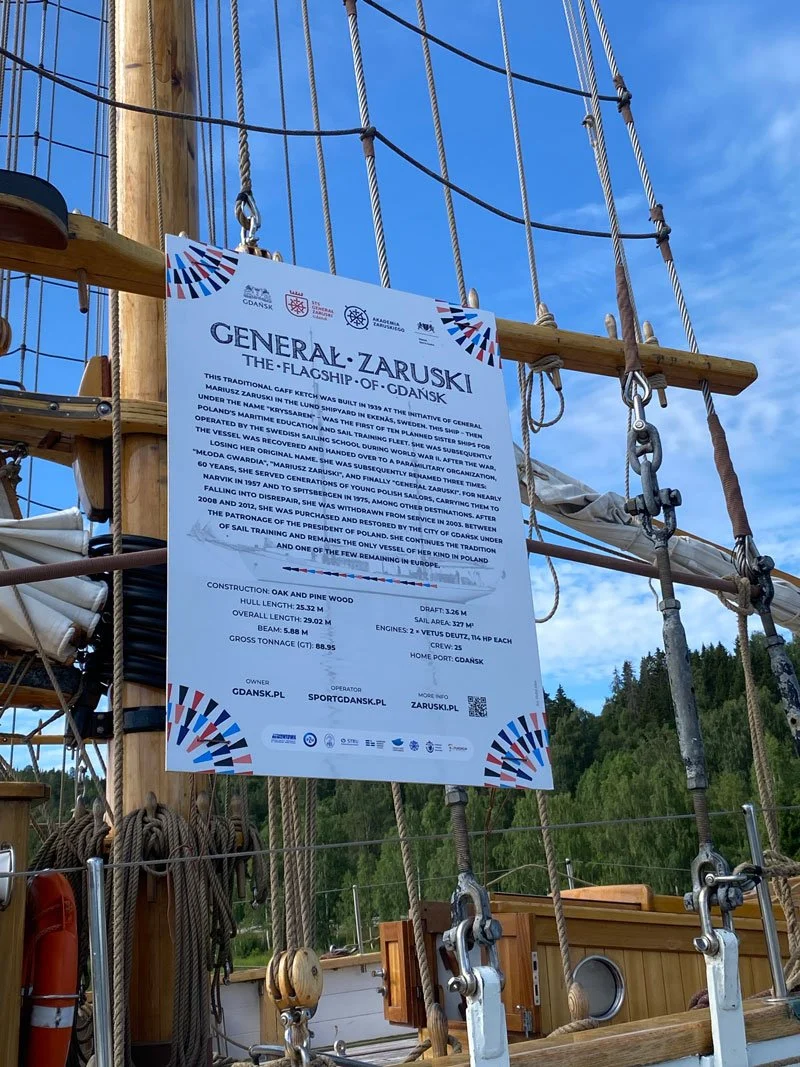
According to the ship’s onboard history board, General Zaruski was built in 1939 in Ekenäs (Sweden) as a traditional gaff ketch, originally under the name “Kryssaren.” She was created at the initiative of General Mariusz Zaruski, with a clear mission: maritime education and sail training.
History didn’t stay calm for long. During WWII she was operated by a Swedish sailing school. After the war she was recovered and passed through different hands, renamed more than once — and, like many working vessels, risked fading into “almost forgotten.”
But she didn’t.
Between 2008 and 2012, the ship was purchased and restored, and today she sails under the patronage of the City of Gdańsk, continuing the tradition of sail training. The board on board calls her one of the few remaining vessels of her kind in Europe — and you can feel why, the moment you step onto the deck.
The numbers (because the sea respects numbers)
From the onboard technical board:
Hull length: 25.32 m
Overall length: 29.02 m
Beam: 5.88 m
Draft: 3.26 m
Sail area: 322 m²
Engines: 2 × Vetus Deutz, 114 HP each
Gross tonnage: 88.95 GT
Crew: 25
It’s the kind of spec list that doesn’t try to impress — it simply tells you: this ship is built to move, to carry people, to work.
Why she’s here (and why it matters): AstroGeoBaltica 2026
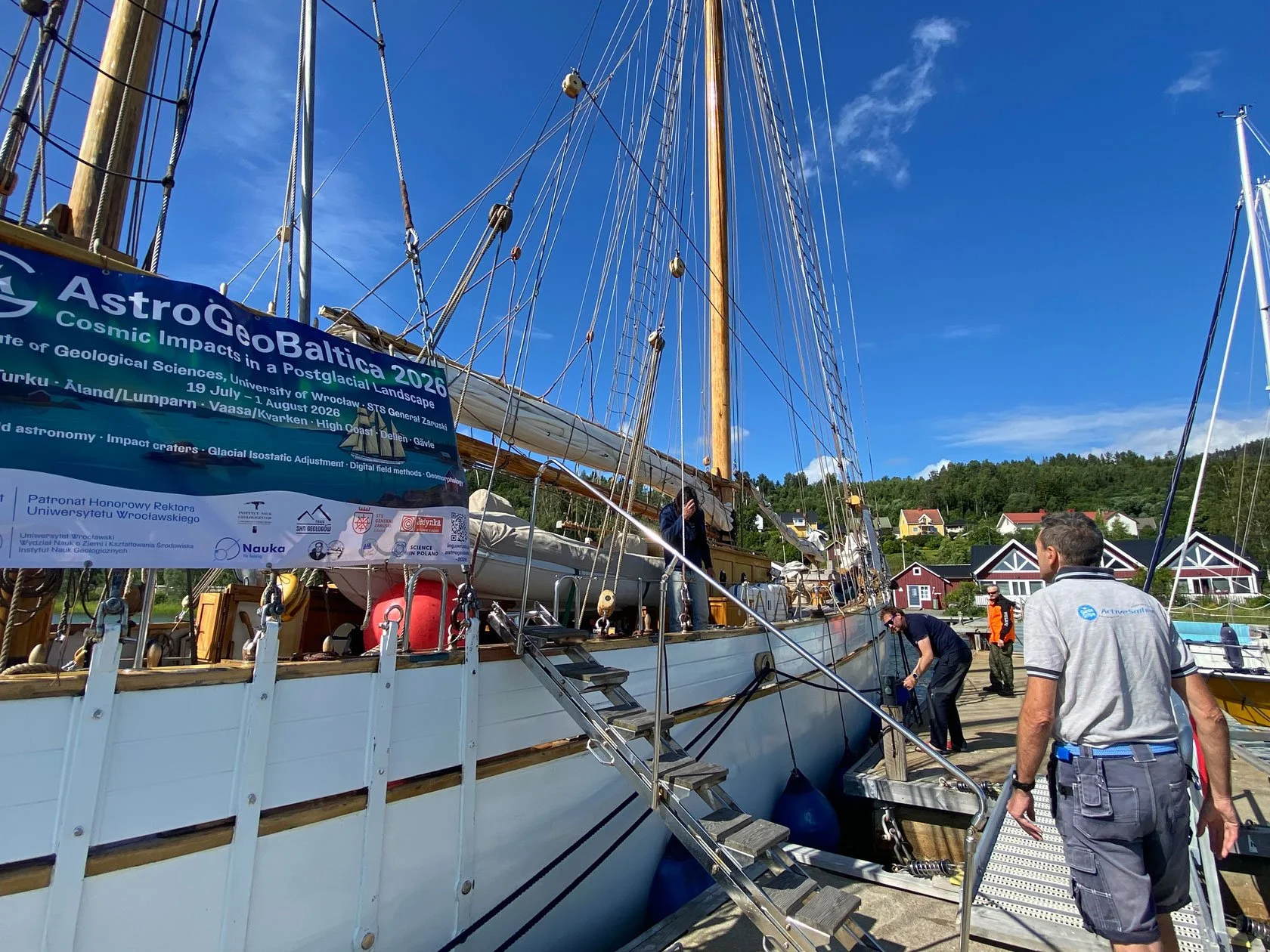
This visit isn’t only about heritage. The crew and onboard team are part of AstroGeoBaltica 2026, a project that blends field science, education, and seamanship.
The expedition is organized by the Institute of Geological Sciences of the University of Wrocław, and runs 19 July – 1 August 2026. The project focuses on the Baltic region as a living outdoor laboratory: postglacial landscapes, glacial processes, and impact structures (meteorite craters) — with a strong educational component and modern tools (including AI-supported digital terrain modelling, as described by the organizers).
And then there’s the route — which, for us here in Höga Kusten, feels like a perfect alignment: Turku – Åland/Lumparn – Vaasa/Kvarken – High Coast – Dellen – Gävle.
A science mission that literally passes through the same seam between sea and mountain that we live every day.
A base camp moment: when worlds overlap
At Docksta Havet Base Camp we often talk about being a “base camp” — not just a place to sleep, but a place where different journeys cross paths: sailors, hikers, runners, families, workation guests.
This is one of those moments.
A historic sail training ship.
A research expedition.
A crew living the rhythm of wind, teamwork, and observation.
And our High Coast landscape in the middle of it all — not as a backdrop, but as part of the story.
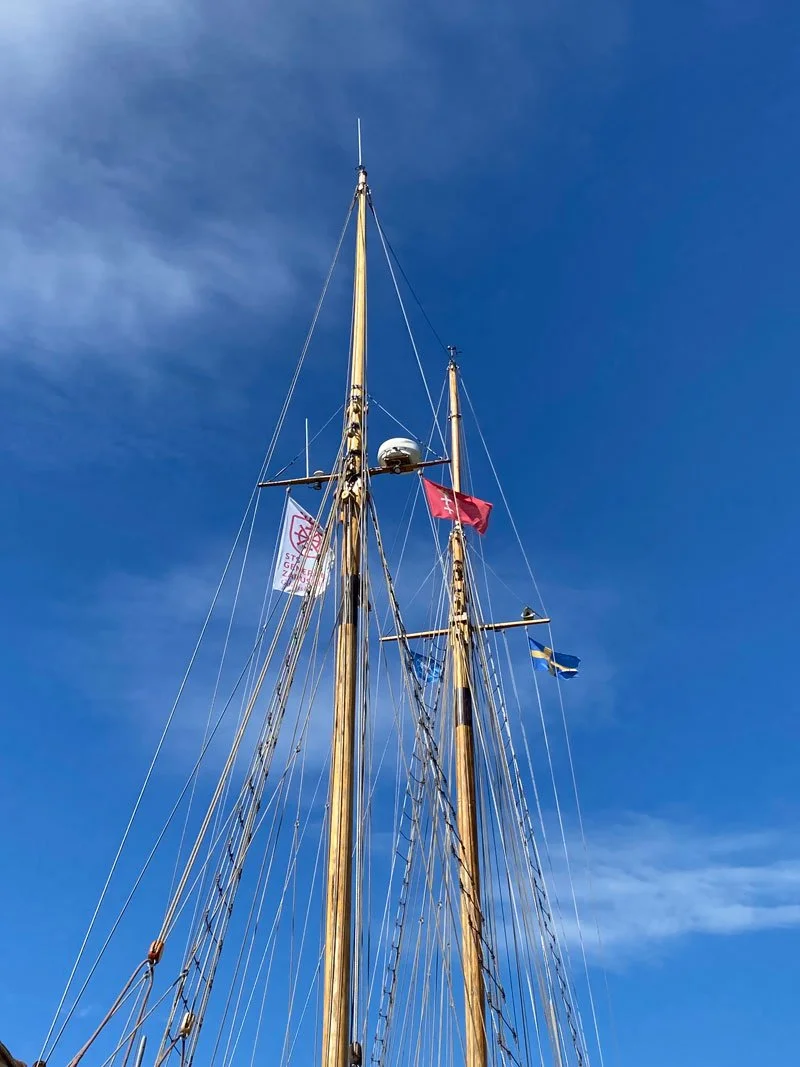
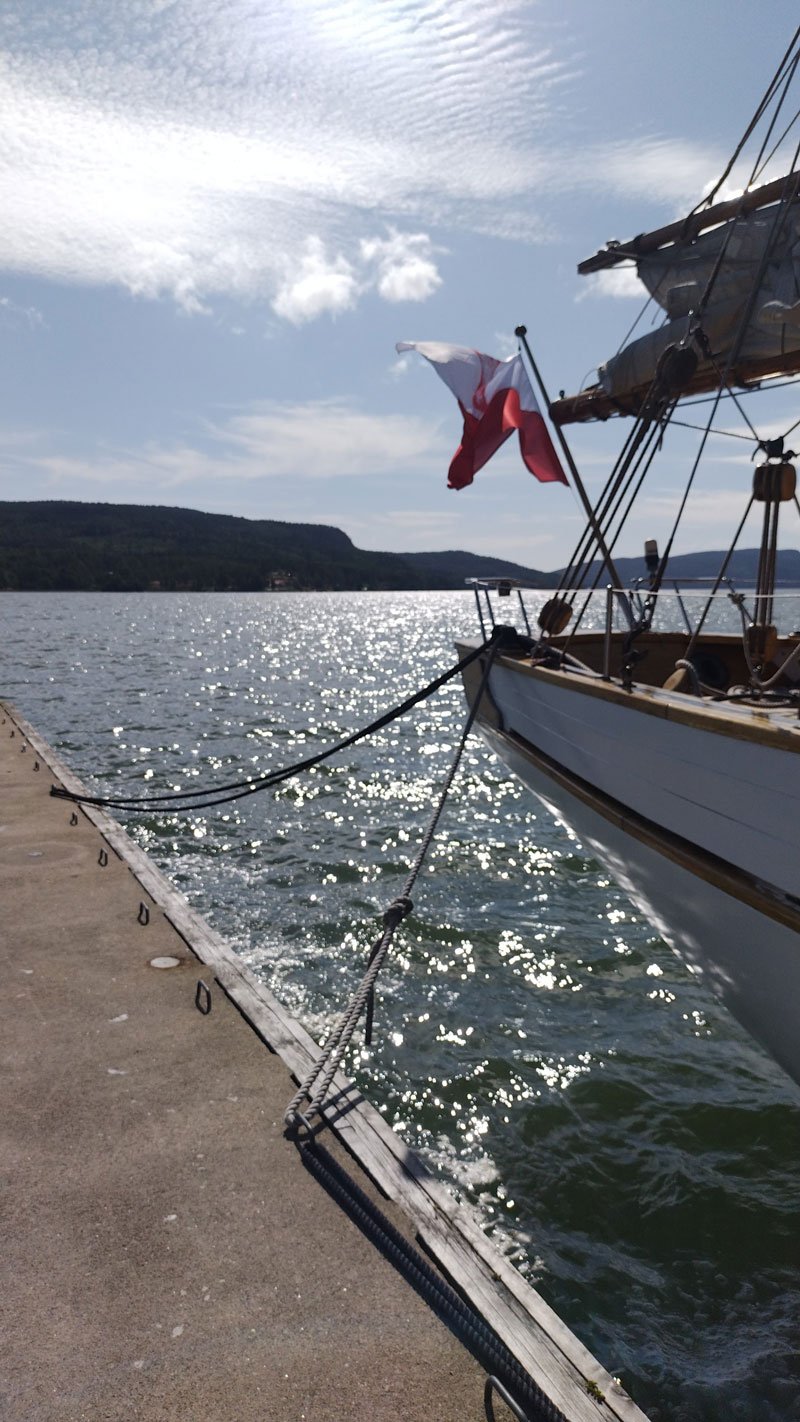
If you’re walking the pier and you see her lines, take a moment. Read the boards. Look at the rigging. Imagine what it means for a wooden ship built in 1939 to still be doing what she was meant to do:
carry people into the real world — and teach them how to see it.
Want to follow the project / the ship?
Official ship site: https://zaruski.pl
AstroGeoBaltica 2026 project page (Institute of Geological Sciences, University of Wrocław): https://ing.uwr.edu.pl/astrogeobaltica-2026/
If you’re here in Docksta while she’s moored: come by the piers, take a slow look, and let the masts remind you — some stories don’t end. They just change wind.